Sixth Form Study Days

Challenge, develop and inspire
How to book
Each of our Sixth Form Study Days is open to multiple schools. Places for each school will be limited and given on a first come, first served basis. To register your interest in attending and receive further information, please complete the online booking form.
Study Days
Britain and the Cold War
Level: KS5
Date: Monday, 11 January 2027
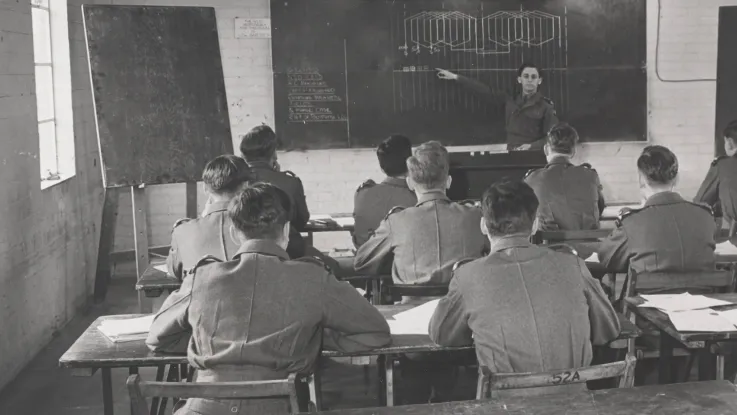
A KS5 History study day on the Cold War and the part Britain's soldiers played in it. Historian Dr Daniel Cowling gives a talk on the standoff between East and West that followed the Second World War, and on where Britain stood as the superpowers faced each other until the collapse of the Soviet Union. In the Mission Reconnaissance workshop, students are introduced to Brixmis, the British military mission that officially kept the British and Soviet commanders in Germany in contact while quietly gathering intelligence across East Germany. After a recorded interview with Roy Hunter, students work in teams to crack coded clues with a cipher wheel and then plan an operation to unmask a mole at a dinner party attended by Soviet and Western officers. In the Archives, students work with original documents from the period alongside the archive team and consider what they reveal about a war that Britain's army spent decades preparing for but never fought in Europe.
Curriculum links:
- AQA A level History (7042), Component 2R: The Cold War, c1945–1991
- OCR A level History A (H505), Unit Y223: The Cold War in Europe, 1941–1995
- OCR A level History A (H505), Unit Y222: The Cold War in Asia, 1945–1993
- OCR A level History A (H505), Unit Y113: Britain, 1930–1997
- Pearson Edexcel A level History (9HI0), Paper 2 Option 2E.2: The German Democratic Republic, 1949–90
- Pearson Edexcel A level History (9HI0), Paper 3 Option 37.1: The changing nature of warfare, 1859–1991: perception and reality
Empire in the World Wars
Level: KS5
Date: Monday, 25 January 2027
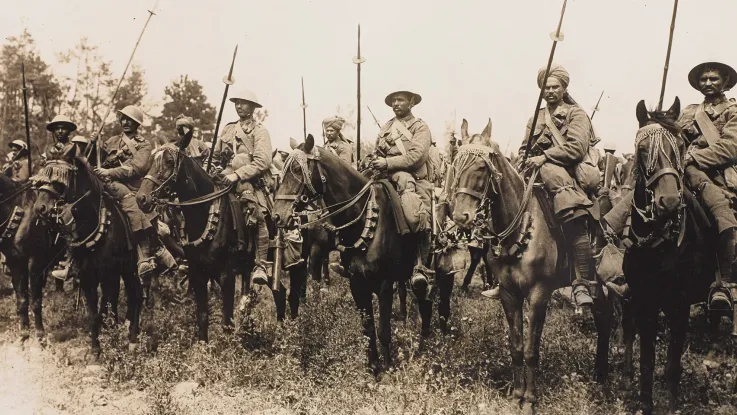
A KS5 History study day on the men the British Empire sent to fight in both world wars. Students tour Drawn on the Western Front: Paul Sarrut and the Indian Army with the Museum's Art Curator and look closely at how one French artist recorded Indian soldiers billeted in northern France. A Museum historian then gives a short talk on the British Indian Army. In the Archives, students handle original documents with the archive team and see how the Museum's collections are catalogued and used. The day closes with a handling session on soldiers from across the Empire and Commonwealth, followed by a trail through the galleries on empire and war.
Curriculum links:
- AQA A level History (7042), Component 1J: The British Empire, c1857–1967,
- OCR A level History A (H505), Unit Y320: From Colonialism to Independence: The British Empire, 1857–1965
- Pearson Edexcel A level History (9HI0), Paper 3 Option 35.2: The British experience of warfare, c1790–1918
- Pearson Edexcel A level History (9HI0), Paper 3 Option 37.1: The changing nature of warfare, 1859–1991: perception and reality
- WJEC A level History, Unit 1 Period Study 4: Politics, people and progress: Wales and England, c1880–1980
The English Revolution
Level: KS5
Date: Monday, 8 February 2027
A KS5 History study day built around the material evidence of the wars of the 1640s. In the Archives, students work with original 17th-century documents alongside the archive team and consider what this kind of source can and cannot tell a historian. They then handle objects from the Museum's collection, including arms and armour carried by soldiers on both sides, and think about what the equipment of an ordinary infantryman reveals about how these armies were raised and supplied. A trail through the galleries takes students to portraits, paintings and objects covering the war itself and the Restoration that followed.
Curriculum links:
- AQA A level History (7042), Component 2E: The English Revolution, 1625–1660
- AQA A level History (7042), Component 1D: Stuart Britain and the Crisis of Monarchy, 1603–1702
- Pearson Edexcel A level History (9HI0), Paper 1 Option 1C: Britain, 1625–1701: conflict, revolution and settlement
- OCR A level History A (H505), Unit Y108: The Early Stuarts and the Origins of the Civil War, 1603–1660
- WJEC A level History, Unit 1 Period Study 2 and Unit 3 Breadth Study 4: Government, revolution and society in Wales and England, c1603–1715
The Indian Uprising of 1857
Level: KS5
Date: Monday, 8 March 2027
A KS5 History study day on the uprising that spread across northern and central India in 1857, long known in Britain as the Indian Mutiny. Historian Dr Alan Jeffreys gives a short talk on the history of the Indian Army, from the East India Company's sepoy regiments, many of which rose in 1857, to the army rebuilt under the Crown in the years that followed. Students then tour paintings and drawings from the collection with the Museum's art curator and look closely at how artists portrayed the Indian Army and its soldiers. In a handling workshop, they use original objects and archival sources as evidence to weigh up the names historians have given to the events of 1857, from mutiny to war of independence. In the Archives, students work with original documents alongside the archive team and think about whose voices survive in the written record of 1857 and whose are missing.
Curriculum links:
- AQA A level History (7042), Component 1J: The British Empire, c1857–1967
- OCR A level History A (H505), Unit Y320: From Colonialism to Independence: The British Empire, 1857–1965
- Pearson Edexcel A level History (9HI0), Paper 3 Option 35.1: Britain: losing and gaining an empire, 1763–1914
- Pearson Edexcel International A level History, Unit 2 (WHI02) Option 1A: India, 1857–1948: The Raj to Partition
British Experience of Warfare in the First World War
Level: KS5
Date: Monday, 22 March 2027
A KS5 History study day on how Britain raised and sustained its armies between 1914 and 1918. A Museum historian gives a lecture on the Royal Flying Corps and what the arrival of air power meant for the conduct of the war. In the Archives, students work with original documents from the period alongside the archive team. They then handle objects from the collection in a session on recruitment and conscription, tracing the shift from a volunteer army to compulsory service and what that meant for the men who served. A gallery trail on the First World War rounds off the day.
Curriculum links:
- Pearson Edexcel A level History (9HI0), Paper 3 Option 35.2: The British experience of warfare, c1790–1918
- Pearson Edexcel A level History (9HI0), Paper 3 Option 37.1: The changing nature of warfare, 1859–1991: perception and reality
- AQA A level History (7042), Component 2M: Wars and Welfare: Britain in Transition, 1906–1957
- AQA A level History (7042), Component 1J: The British Empire, c1857–1967
- OCR A level History A (H505), Unit Y315: The Changing Nature of Warfare, 1792–1945
- WJEC A level History, Unit 1 Period Study 4: Politics, people and progress: Wales and England, c1880–1980
War in Art and Architecture
Level: KS5
Date: Monday, 26 April 2027
A study day for KS5 History of Art students, covering the War theme on Paper 1 and offering practice in visual analysis. Students tour the galleries with the Museum's Art Curator and look closely at how conflict has been painted, sculpted and commemorated, and at the gap between what soldiers experienced and what was put on display at home. An art historian from the Museum's Learning team gives a lecture on war art. In the Archives, students work with original visual material from the collection. A handling session on recruitment posters and printed imagery asks how pictures were used to persuade a generation to enlist.
Curriculum links:
- Pearson Edexcel A level History of Art (9HT0), Paper 1 Theme: War in Art and Architecture
Join our learning mailing list
Be the first to hear about our latest workshops, resources and study days. Simply fill out the form to receive regular updates direct to your inbox.

Explore further
Workshops for schools
Self-guided gallery visits
Plan your school visit
Gallery trails
Learning resources