The Context
By the autumn of 1942 the war in North Africa had been raging for two years and had witnessed dramatic changes of fortune. The battle ebbed and flowed, not only in accordance with the varying fighting abilities of the combatants, but also the shifting strategic priorities of the political leaders and the dictates of severe logistical constraints.
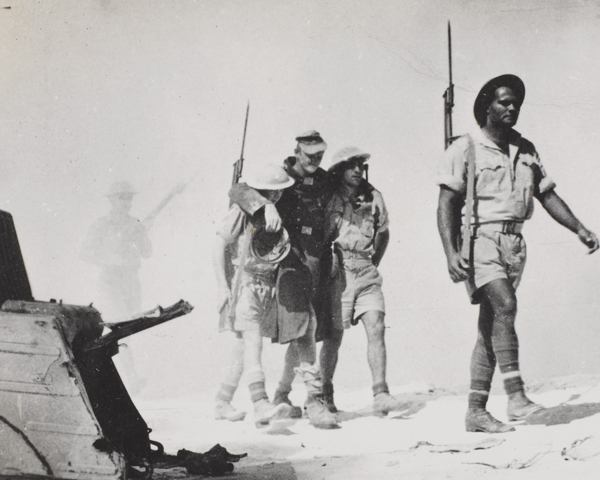
Waged over a vast expanse of desert, the campaign took on a unique character. While the terrain provided great opportunities for daring manoeuvres by mechanised forces, it also exposed the troops to many dangers and hardships, such as thirst, heatstroke, sandstorms and flies.
Conflict in the region had been ignited by Italy’s entry into the war in June 1940. Intent on winning an empire in the Mediterranean, in September 1940 the Italian Fascist dictator Benito Mussolini ordered an invasion of Egypt from the Italian colony of Libya. This invasion threatened Britain’s vital strategic assets, the Suez Canal and the Persian oil fields. However, when the ill-equipped and badly led Italians were defeated by a much smaller British force, Germany was compelled to intervene on behalf of its ally in the spring of 1941.
Under the bold leadership of General Rommel, the Axis enjoyed startling successes, recapturing Libya and threatening Egypt. Yet, by the end of 1941, when Rommel’s forces had overstretched their supply lines, they were forced to fall back in the face of a determined British offensive. In 1942 a revived Axis effort saw Rommel inflict a severe defeat on the British at Gazala and capture the crucial and symbolic port of Tobruk.
For a while it seemed that Rommel would realise his grand strategic vision of linking up with German forces advancing in the Caucasus and so overrun the whole of the Middle East. The British were forced to conduct a chaotic retreat into Egypt, but were just able to rally their battered army and make a stand at El Alamein. This was a position that, unlike others in the desert, could not be turned by a flanking manoeuvre. It bordered both the sea and the Qattara Depression, a sea of quicksand impassable to mechanised forces.
The summer of 1942 saw the defeat of Rommel’s final desperate efforts to breakthrough into Egypt. The initiative now lay with the British. Under their new commander, Lieutenant-General Montgomery, they planned another offensive that would finally end the Axis threat to the Middle East.
The Armies
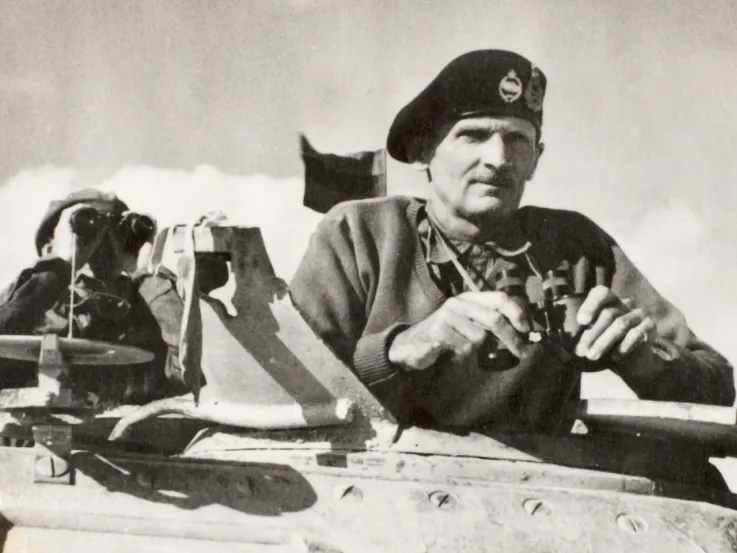
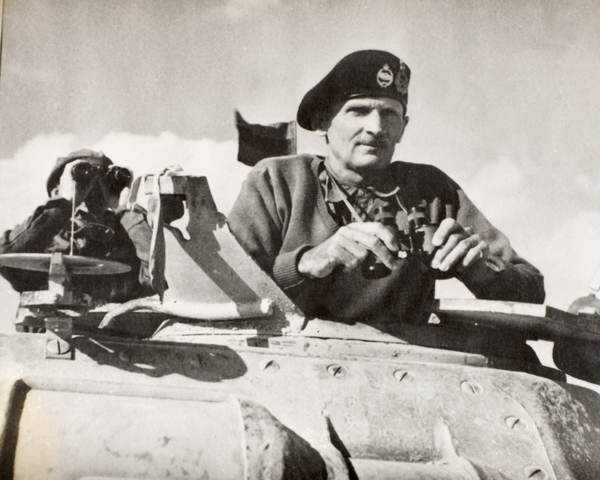
Lieutenant-General Bernard Law Montgomery (1887-1976) was one of the most capable, and controversial, commanders in the British Army. In August 1942 he was appointed Eighth Army's commander and immediately set about transforming the fighting spirit and abilities of his men. At Alamein he commanded over 190,000 men from across the British Empire, Greece, Poland and France. They were equipped with over 1,000 tanks, 900 artillery pieces and 1,400 anti-tank guns.
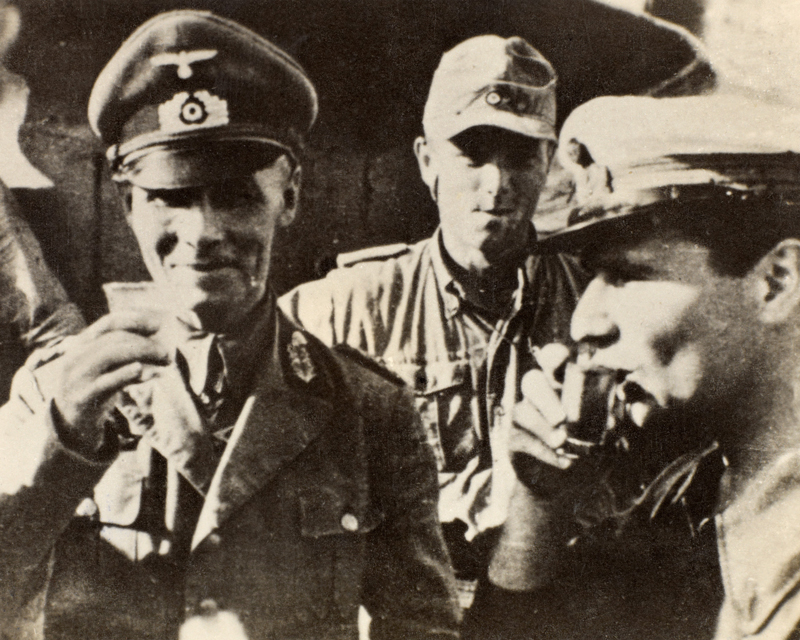
Field Marshal Erwin Rommel (1891-1944) had already achieved legendary status for his daring and brilliant generalship during the battles for France and North Africa. Rommel was a master of desert warfare, earning the nickname of the ‘Desert Fox’. Exuding frenetic energy and leading from the front, he inspired his troops to great feats of heroism and endurance.
His instinct for handling armoured formations, combined with the qualitative superiority of German units, enabled the ‘Afrikakorps’ to consistently outmatch the Allies, often against heavy odds. At Alamein he commanded 116,000 German and Italian soldiers, 540 tanks, 500 artillery pieces and 490 anti-tank guns.
The Battle
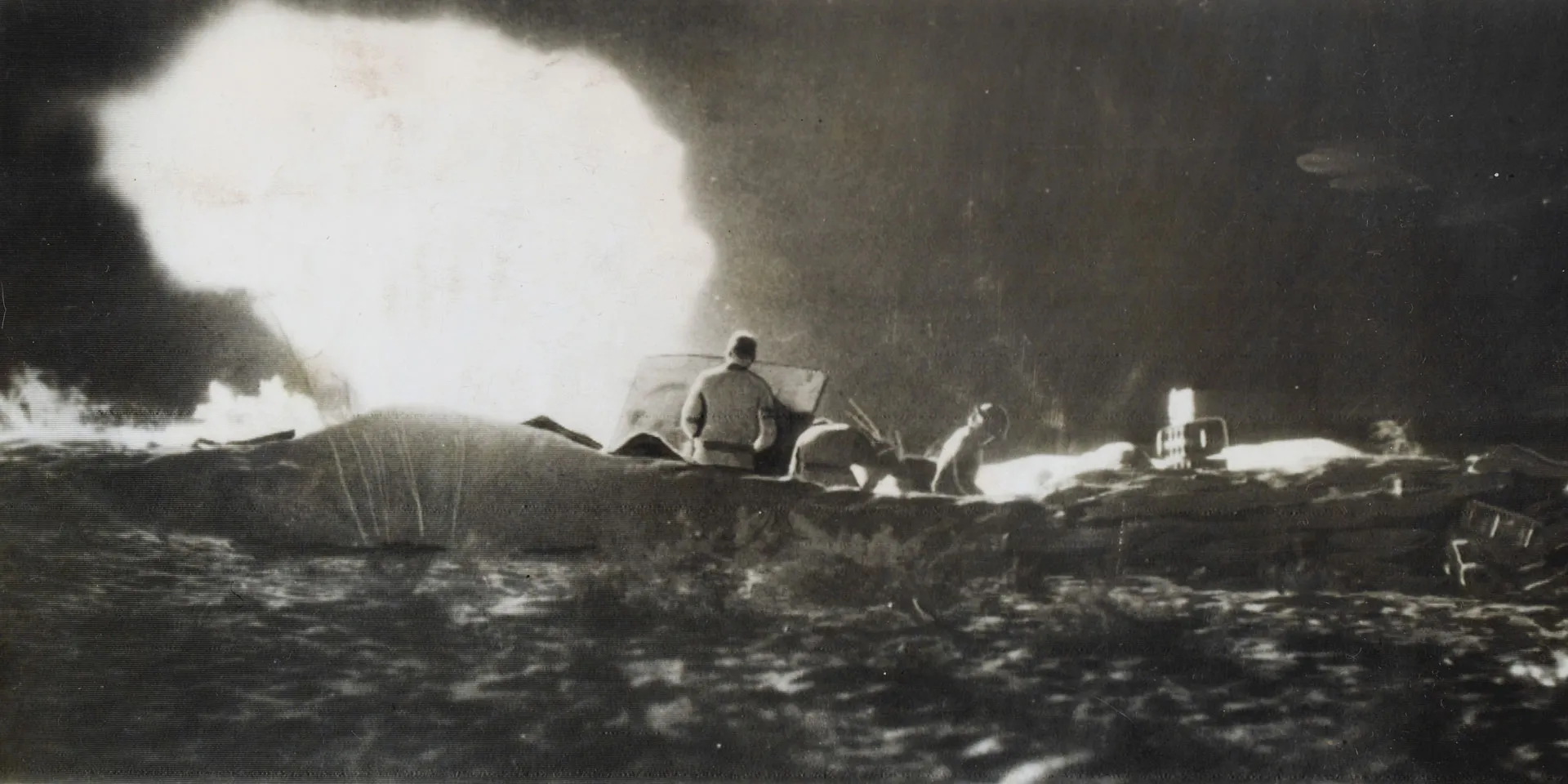
The Axis forces were once more in a critical supply situation. Lacking the fuel and mechanised forces to fight a mobile battle Rommel instead constructed strong defensive positions protected by deep minefields, which he nicknamed the ‘devil’s gardens’.
Realising the strength of the Axis defences, Montgomery resisted the impatient pleas of British prime minister Winston Churchill for an early attack. Instead he set about building up his forces, improving the morale and training of his troops, ensuring that he had superior numbers of men, tanks, guns and aircraft.
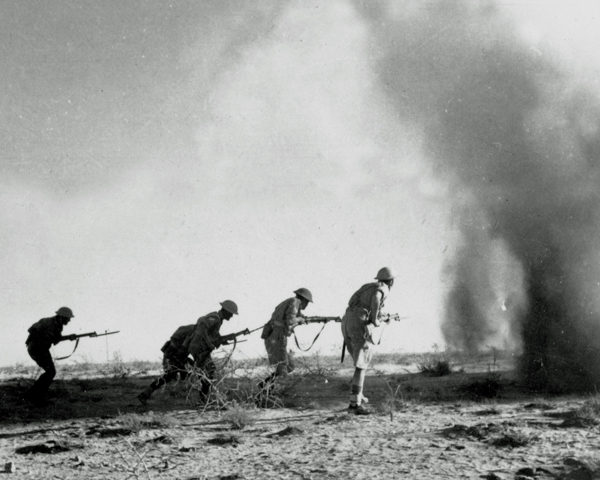
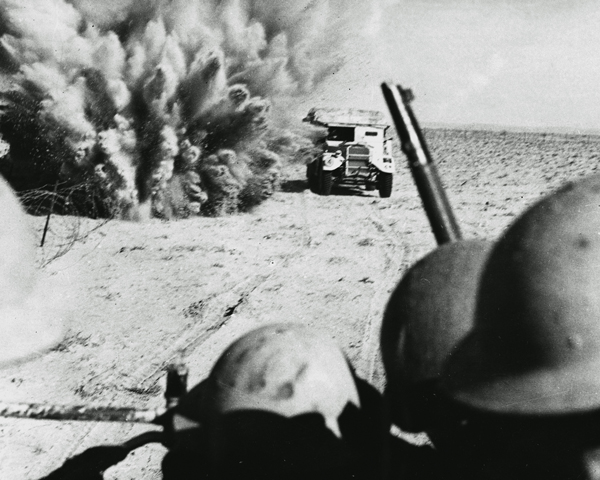
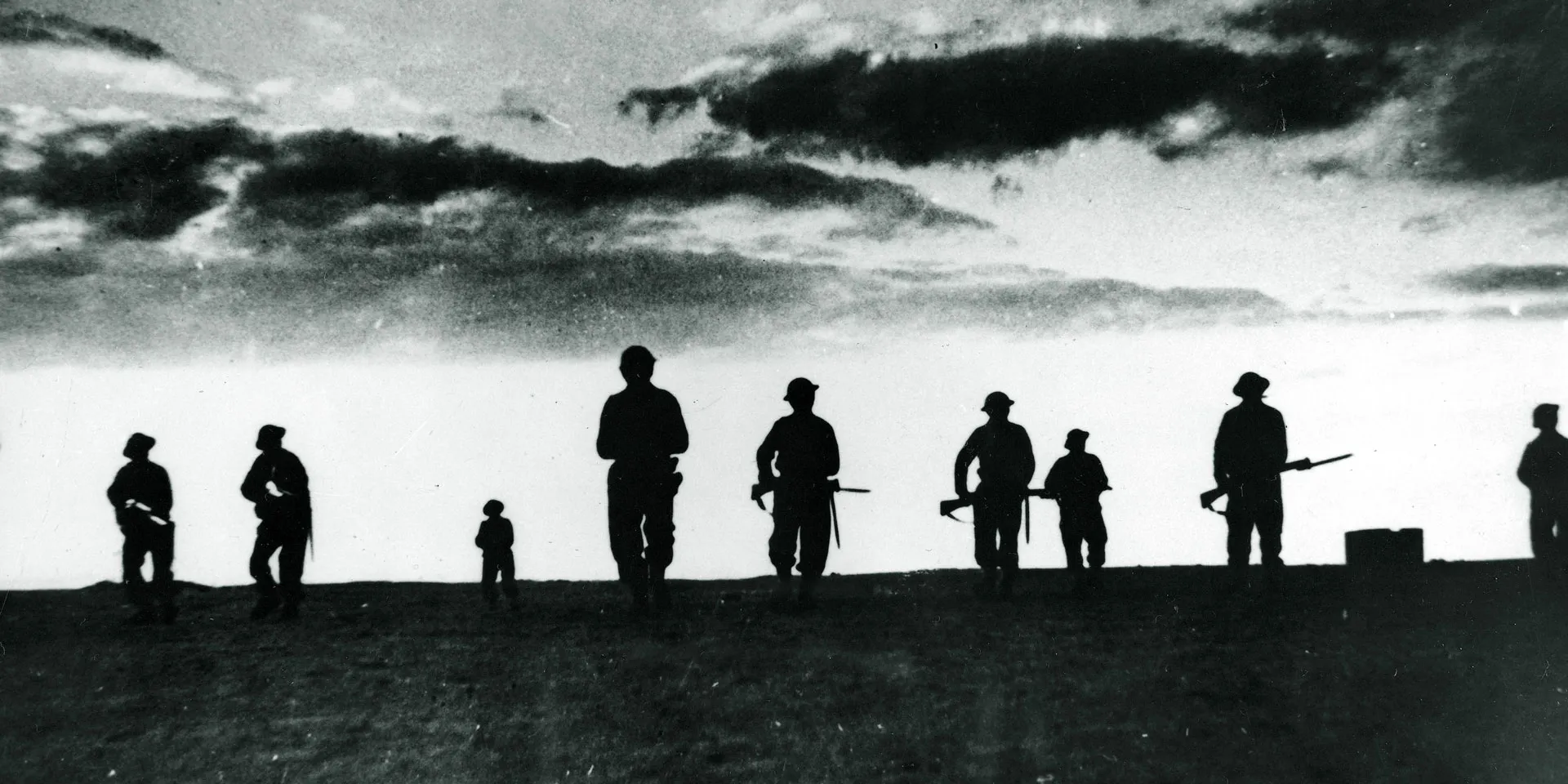
Having assembled a powerful multinational Allied force, Montgomery unleashed his offensive on the night of 23 October with a spectacular gun barrage. In the early hours of 24 October British infantry and engineers began Operation LIGHTFOOT, a painstaking and hazardous process of creating two channels in the minefields, through which the armoured forces were to advance.
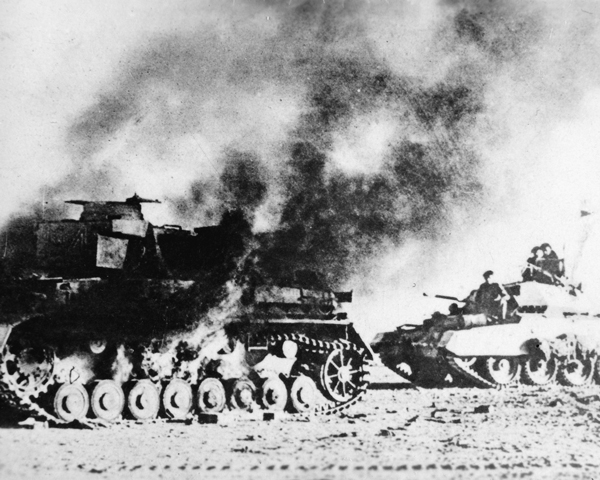
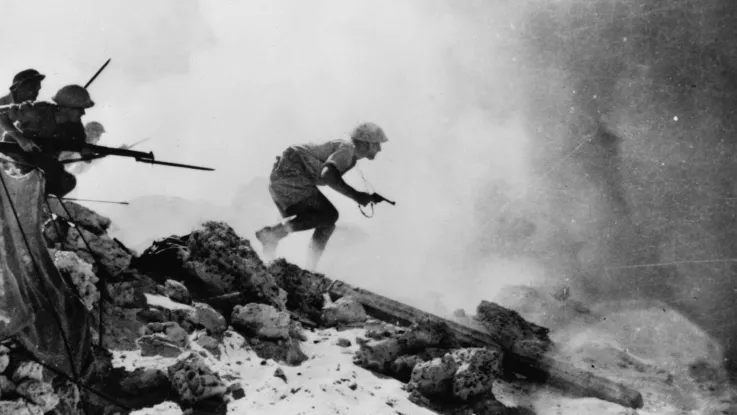
The British then established a forward line from where the Axis forces would be engaged and worn down. This battle of attrition, euphemistically termed ‘crumbling’ by Montgomery, involved brutal close-quarter fighting in which the soldiers were tested in a maelstrom of heat, noise and horror. While they were able to beat off Axis counter-attacks, British efforts were hampered as their tanks were held up in the congested minefield corridors and suffered punishing losses from enemy anti-tank guns.
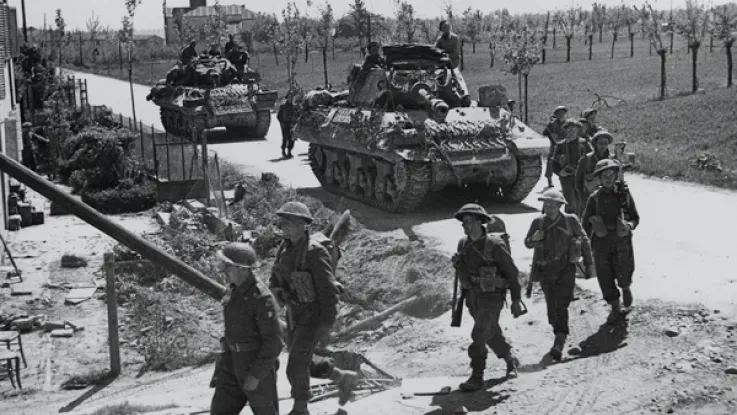
Despite the difficulties, Montgomery held his nerve. He pressed home the attrition of the enemy forces and launching a diversionary attack to draw in scarce Axis reserves. He then paused and regrouped before launching his final attack, codenamed Operation SUPERCHARGE, on the night of 1-2 November. After several more days of severe fighting the British achieved a decisive breakthrough on 4 November.
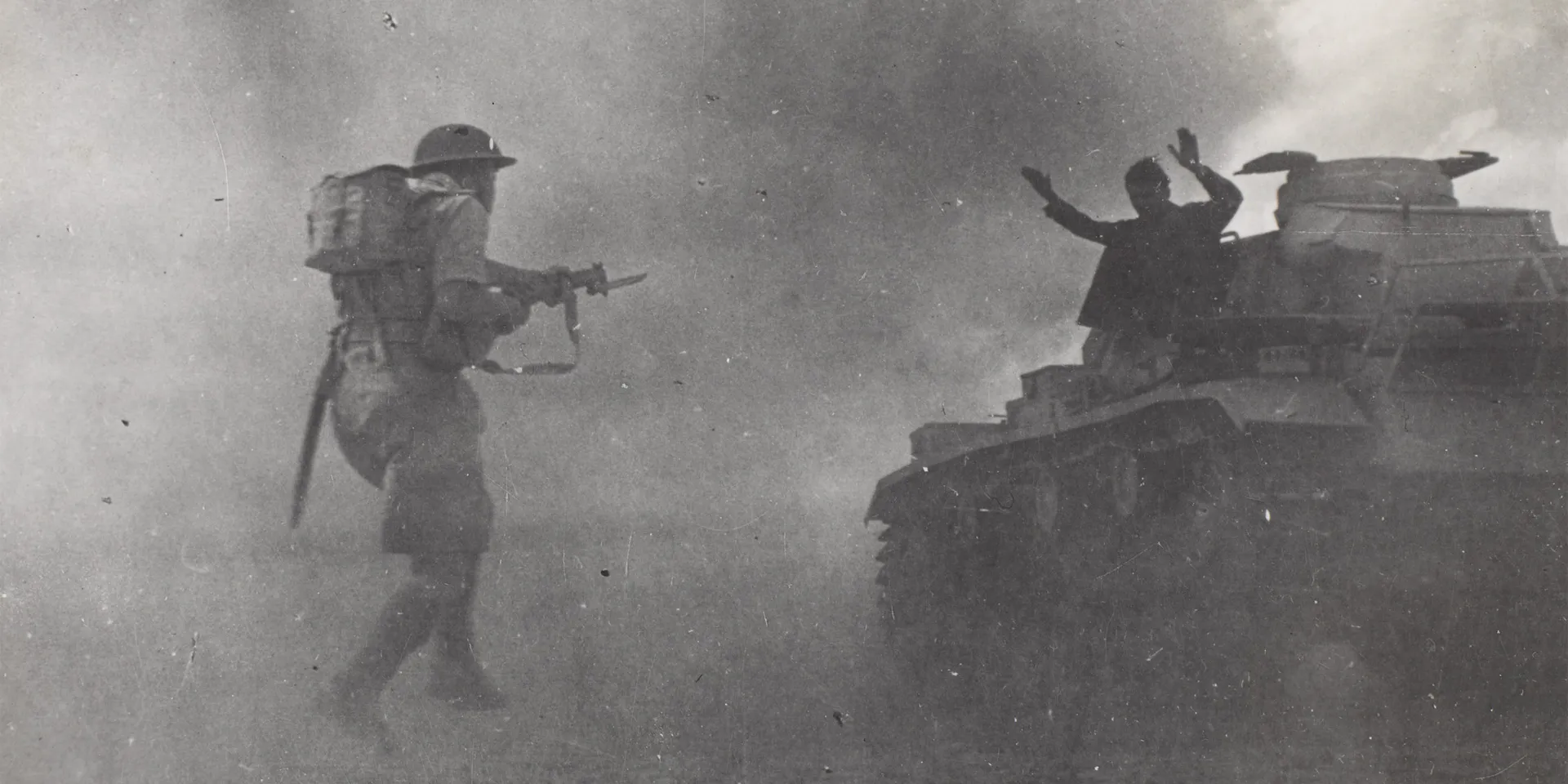
While the British captured the bulk of the Axis infantry, Montgomery’s caution allowed the motorised portion to escape and live to fight another day. None-the-less the British had won a remarkable victory and Montgomery began pursuing his beaten foe back into Libya and Tunisia beyond.
The Impact
El Alamein was the first clear-cut and irreversible victory inflicted by the British Army upon the Axis forces. Coming after years of frustrating setbacks and disasters, this was an immense boost to British morale. Victory proved that the problems that had plagued the British Army for years had at last been overcome and that British equipment, tactics, generalship and fighting spirit were a match for the Axis.
For Churchill, the victory had been vital for re-establishing British prestige before America reduced Britain to the role of junior partner in the western alliance. It was for this reason that Churchill had been so anxious to instigate the battle before the Allies launched Operation TORCH, which entailed landings on the coast of Algeria and Morocco.
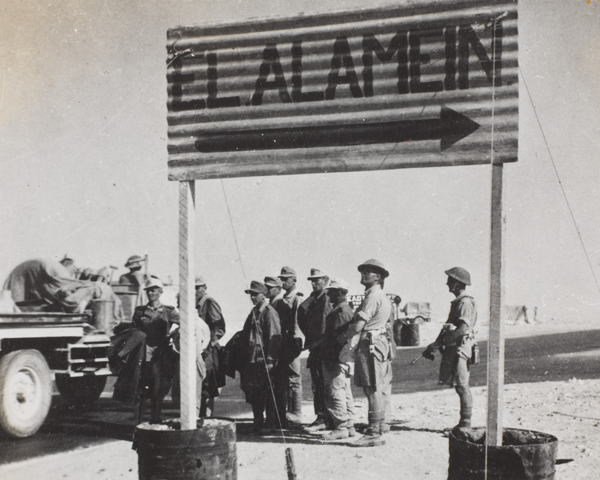
These began on 8 November and forced the Axis to fight on two fronts in North Africa. With the Allies also prevailing in the naval and air wars raging in the Mediterranean, the Axis position in North Africa was now untenable. Despite this, Hitler belatedly ordered a massive re-enforcement, which enabled the Axis to fight a defensive campaign in Tunisia into 1943. However, although they fought a tenacious rearguard, the Axis forces were in an impossible position and in May were forced to surrender, with the loss of around 240,000 prisoners.
The Allies had won a great victory and were now free to launch an invasion of southern Europe at a time and place of their choosing. They elected to do so in Sicily and Italy later in 1943.
The Legacy
Aided by Churchill’s rhetoric, which extolled the battle as ‘the end of the beginning’ of the war, El Alamein has become enshrined in British mythology as a great strategic turning point of the Second World War. This may be an overstatement given that the North African campaign was only a sideshow compared to the titanic battles waged on the eastern and western fronts. However, the battle was a great boost to national morale and became one of the most celebrated victories of the war. It remains well known through the many films and documentaries about the desert war that have been produced.
El Alamein also established the reputation of Montgomery. Using his talent for self-publicity, Montgomery claimed all the credit for the victory. This made him a household name and secured him prestigious commands in Italy and North- West Europe. While he was able to cement his image as a national hero, Montgomery’s conduct during the battle remains the subject of much debate.
One bitter legacy of the battle is the huge quantity of unexploded mines and ordnance that still litters the battlefield. Thousands of local people have been killed or maimed in the 70 years since the battle took place.
The Commonwealth War Graves Commission’s El Alamein War Cemetery contains the graves of over 7,000 Commonwealth soldiers who died during the campaign. The cemetery also contains the Alamein Cremation Memorial to the 600 men whose remains were cremated in accordance with their faith. The town of El Alamein has a small museum dedicated to the battle. Just outside the settlement there are Italian and German military cemeteries, the latter containing an ossuary with the remains of over 4,200 soldiers.
18 March 2013, 9.57pm
Alexander and Montgomery
Alexander and Montgomery turned back Rommel's forces at El Alamein, thus winning what Churchill called "The Battle of Egypt." I have never promised anything but blood, tears, toil, and sweat. Now, however, The bright gleam has caught the helmets of our soldiers, and warmed and cheered all our hearts. Now this is not the end. It is not even the beginning of the end. but it is, perhaps, the end of the beginning.
14 March 2013, 5.49pm
Strictly speaking the only
Strictly speaking the only land battle of the Second World War that British and Commenwealth forces won without American or Russian help...
2 March 2013, 1.57am
Please allow to see El
Please allow to see El Alamein a little bit different. Doubtless was Rommels defeat. The victory is owed to british stubborness and braveness on the one hand, which is absolutely the matchwinner. The other hand holds, in fact, overstretched supplylines, a bad lack of artillery ammunition, lack of diesel, at times leading by subordinates owed to Rommel's health, outnumbered troops and a ragged tank equipment providing a fifty pieces to the field. Before the first day was done the fatally exposed intelligence company was smashed by British vanguarding assault troops. The level of this intelligence company was awfully shocking to Montgomery. Those actual achived knowledges meant the turning point of the battle. A silky twist, if you allow this way of discription.
Please allow to proove, the first 51st Highland wasn't out to draw Rommel from Dunkirk. They were sent away from Dunkirk on direct order of Churchill as a sign to hold the French on the field as an ally. As the order was given every officer of the 51st knew they wouldn't return. It was a political sacrifice by Churchills hand. As the 2nd 51st headed into Germany later on they were told to regain honour on battlefield and to annihilate disgrace.
The first 51st never lost honour or did fail, they had lost the stand under an useless horrible political order in full duty which earned them high respect. But, it was once more sacrificing the Scots...
Please allow to proove details concerning Dunkirk. For what reason would you let go a 330.000 men? You did bag them before into the narrowest available sack in rapid and pelting time excluding coincidence. Surround them mortally by subs, tanks and superior arms.
Please consider for a moment, Britain would have stand at El Alamein alone on the battlefield theatres. Without US supplies (as Roosevelt considered in Feb. 1940 by proof) or without a russian front since June 1941, being heavily US-backed since August 1941. Backing up the 8th army came to work when the 15th Div. under Ladislav Anders went thru Persia after being released from russian POW-barracks. With Vichy-troops have been fought in Syria and an open insecurity about the Irgun flew in from Palestine.
Please don't ever give chance to compare El Alamein with the outcome of a battle like Kursk in July 1943. Regard El Alamein as that what it was, a harsh fought battle with terrible losses and a re-entry of badly needed courage to moral on British side. So, please honour all poor brave men who gave their last and best to overcome by belief. El Alamein wasn't that one to break the Wehrmacht's backbone and to give free sight onto final victory. It brought silverlining.
My uncle Pieter, now 92, led a tank platoon at El Alamein. He was First Lieut. with Ladislav Anders 15th. Div. He later met my uncle Kurt at Monte Cassino in combat. After the war they decided to have beer whenever Pieter visited us. They found out the only decisive winner was Death. And that war poisons life and view of the young and leaves a mystick krewe in the following up - that means: us. Could they've been right? Thanks for being patient.
24 February 2013, 4.43pm
This was a crucial
This was a crucial turning-point - the most important and decisive battle in British history. Without this, the defeat of Germany would not have been a foregone conclusion.
21 February 2013, 6.54am
Was it not the second 51st
Was it not the second 51st Highland Division (the first was abandoned in France after drawing Rommal away from Dunkirk) that led the attack with Aus NZ and Indian Divisions. Indians were poorly paid and equipped, and badly treated after the war.
13 February 2013, 6.48pm
Rommel taking Middle East oil
Rommel taking Middle East oil supplies would've been a terrible blow to Germany's opponents. He asked Hitler for 5 panzer divisions to achieve this, but the Fuhrer saw North Africa as a sideshow, so the Desert Fox's victories were achieved with just 4 German panzer battalions (plus the Italians, whose reputation still suffers from wartime Britain's derisive propoganda).
Don't forget the 'British' 8th Army included Indian, Australian, South African and NZ divisions, Greek, Polish, and French brigades, and the Jewish Brigade of 71 nationalities!
13 February 2013, 3.04pm
It was the first decisive
It was the first decisive defeat of the German army. Aside from the strategic importance of Rommel's defeat (saving the Suez canal, our Middle East oil supply and the vital trade route through the Mediterranean) it was an immense boost to British moral (for our armed forces and at home) and showed that the German military forces were not unstoppable.
5 February 2013, 11.33am
This was a pivotal battle
This was a pivotal battle which turned the tide for the 8th army and stopped german advances to the suez canal and beyond.
3 February 2013, 10.10pm
this was the end of the
this was the end of the beginning when the war was turned to our favour
Add your comment
Please note: By submitting a comment you are agreeing to the terms laid out in the National Army Museum's Rules for User Comments. Any views expressed in user comments do not necessarily reflect or represent the views of the National Army Museum or its staff.