The Context
Under the codename Operation VERITAS, British soldiers deployed to Afghanistan in November 2001 in an attempt to eradicate al-Qaeda after the 9/11 attacks. Operation FINGAL and the deployment of 2,000 troops followed this as part of the International Security Assistance Force (ISAF) that was formed by the United Nations (UN) in December 2001.
In spring 2002 a task force based on 40 Commando Royal Marines conducted Operation JACANA to destroy insurgent bases in eastern Afghanistan as the remnants of al-Qaeda fled across the border to Pakistan. Thereafter, British troop levels in Afghanistan fell and all subsequent activities were conducted under the codename Operation HERRICK.
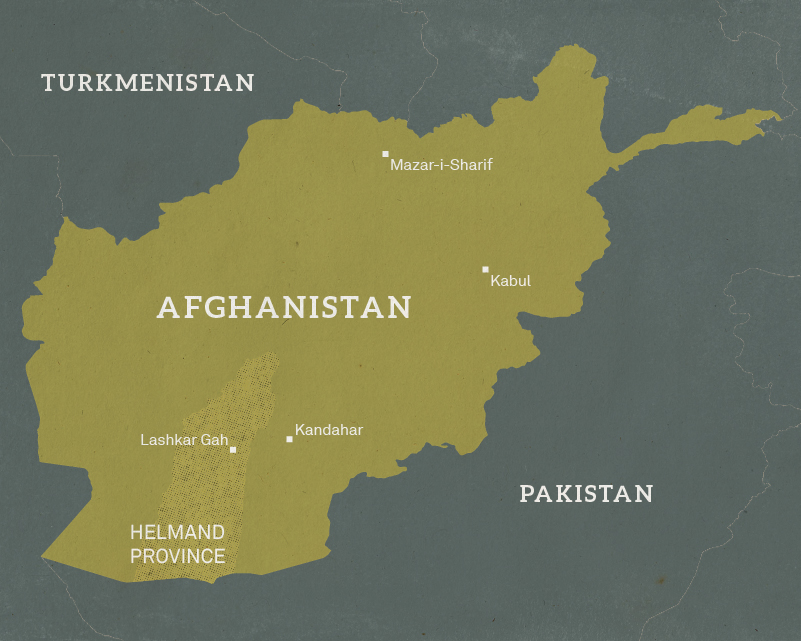
A primary function of ISAF strategy was to promote economic development and reconstruction across the war-ravaged country. In early 2006 the British deployed a Provincial Reconstruction Team (PRT) to the southern province of Helmand. Deep in the Pashtun heartland, Helmand was the spiritual home of the Taleban. It was also a major poppy growing area that produced 20 per cent of the world’s opium.
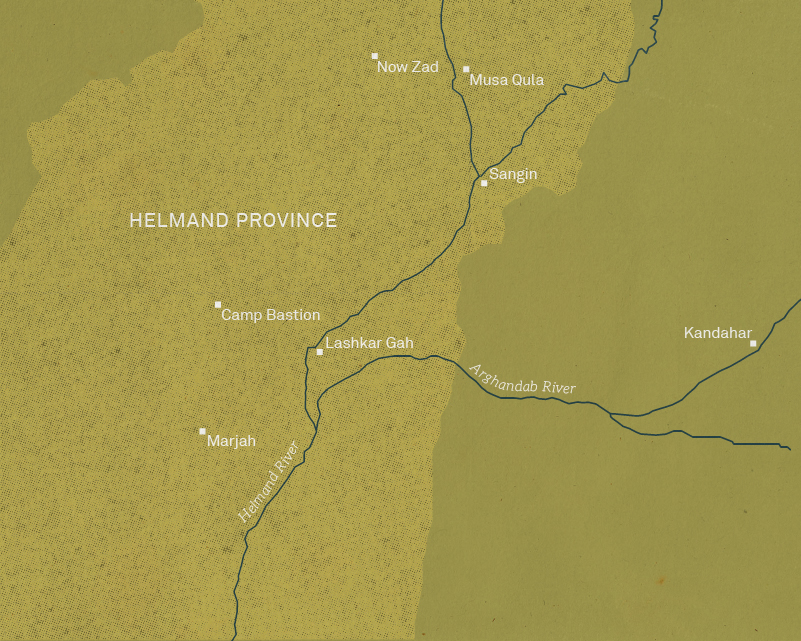
3 Para Battle Group supported the PRT’s activities. Its soldiers were tasked with providing security in the region as well as training the Afghan National Police (ANP) and the Afghan National Army (ANA). Based at Camp Bastion near the provincial capital Lashkar Gah, the 3,300 British personnel were assisted by other ISAF units including Danish and Estonian troops.
The Helmand force was only able to put 650 men in the field across the whole province. Accordingly the paratroopers and infantry were spread far and wide in Forward Operating Bases or in the main urban areas to provide security prior to the fielding of the PRT.
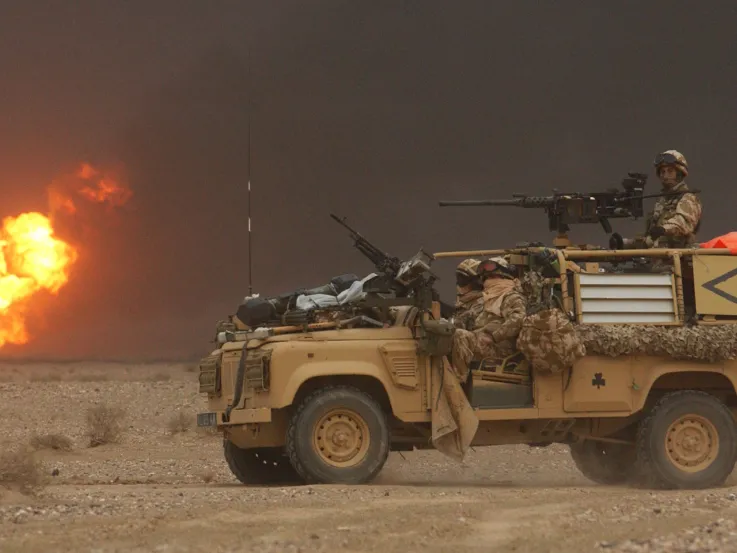
The towns of Gereshk, Musa Qala, Now Zad and Sangin soon witnessed ferocious fighting. British soldiers operating in full body armour, with up to 80 pounds of equipment, fought in temperatures of nearly 50C. In the so-called ‘Platoon House Strategy’, small units were emplaced at the main administrative building of towns from where they undertook patrols unless besieged by the Taleban. These ‘district centres’ then became forts to be defended against the insurgents.
The Armies
Under the command of Major Nick Wight-Boycott, the Pathfinder Platoon was a long-range reconnaissance formation and an elite within The Parachute Regiment. As the fighting developed, they were joined by the Danes of Major Lars Ulslev Johannesen’s 1st Light Reconnaissance Squadron and Major Adam Jowett's 'Easy Company', which consisted of elements of 3rd Battalion The Parachute Regiment, and Somme Platoon 1st Battalion The Royal Irish Regiment.
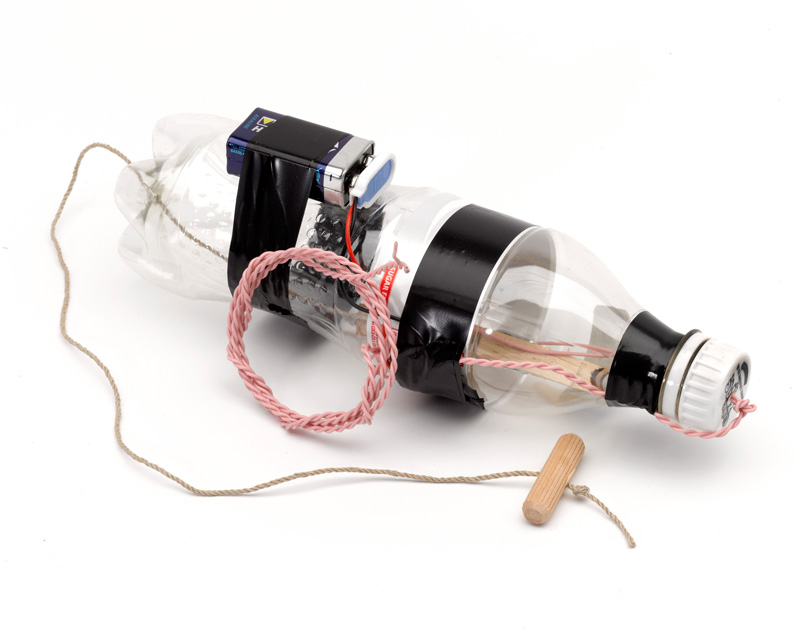
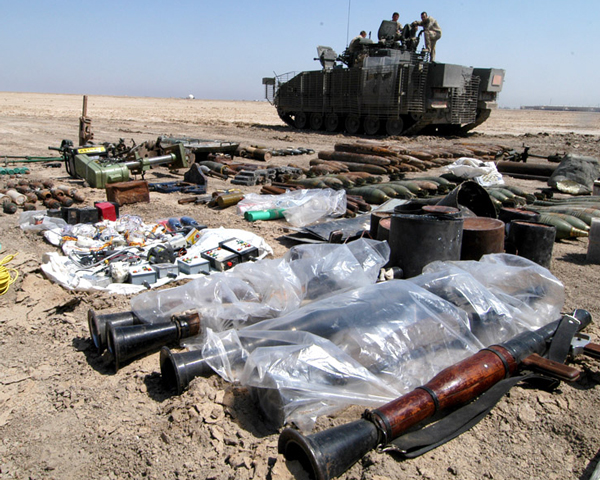
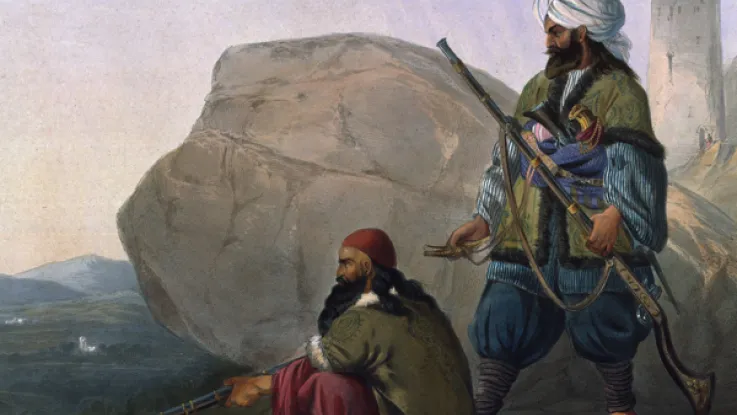
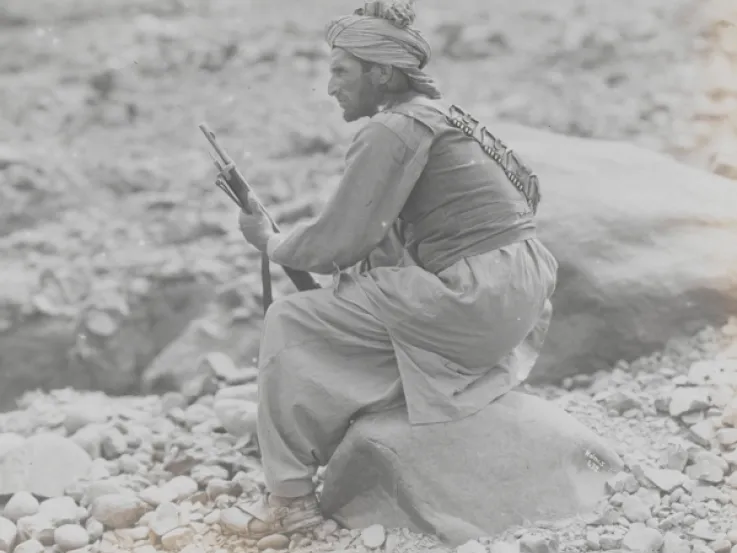
The Taleban are an extreme Islamist movement organised on Pashtun tribal lines. Resilient in defence and capable of close combat, they use automatic weapons and rocket-propelled grenades, but can carry out longer-range attacks using mortars and rockets. They also plant Improvised Explosive Devices (IEDs). The Musa Qala Taleban were led by Mullahs Tor Jan and Matin Akhund.
The Battle
On 18 May 2006 the Taleban attacked the district centre of Musa Qala, killing 20 members of the ANP. A nearby British unit, the Pathfinders, was committed to counter them but arrived as the battle died down. With Musa Qala now a prime target for the Taleban an American force was stationed in the town and the Pathfinders withdrew; but not for long. On 14 June they returned to Musa Qala prior to the deployment of a platoon from ‘A’ Company of 3 Para (the latter never actually arrived as they were diverted to Sangin on 18 June). The Pathfinders were confined to a walled compound in the town centre, where the highest building was nicknamed ‘the Alamo’.
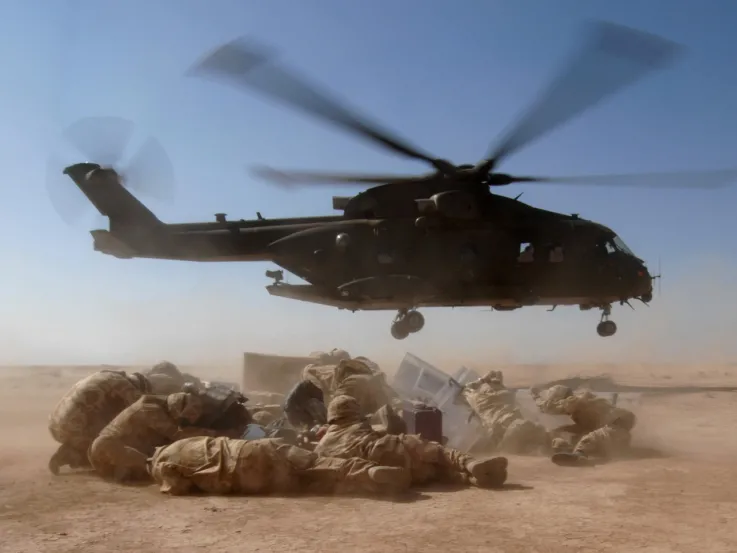
The troops conducted a vigorous programme of patrolling to deter the Taleban and reassure the local population. But with the insurgents encroaching on the town, resupply by helicopter became increasingly difficult, as did troop reinforcement by land or air. Nevertheless, a contingent of 20 gunners from 3 Para’s supporting 105mm gun battery, 15 sappers and ten ANA soldiers augmented the garrison in early July. There was just sufficient time for the sappers to improve the compound’s defences before the first major Taleban attack on 16 July.
Fighting continued through the night but the assault was repulsed with heavy losses to the insurgents, although the British suffered no casualties. Three days later the Taleban attacked again but were thwarted by supporting artillery fire. Originally deployed for three days, the Pathfinders had by now been in Musa Qala for six weeks. The troops were nearing exhaustion but they were also low on food and ammunition.
On 24 July the largest Taleban assault began. Some 300 fighters attacked from all directions but once again they were beaten off with heavy losses while the garrison suffered three wounded. Two days later reinforcements came by road when the Danish 1st Light Reconnaissance Squadron, known as ‘The Griffins’, arrived to relieve the Pathfinders. The Danes’ firepower added greatly to the defences of the compound.
Their arrival finally allowed the Pathfinders to leave Musa Qala after 52 days, but it required a full-scale battle group operation, codenamed SNAKEBITE, to replace them with a composite force from 3 Para and Rangers of Somme Platoon 1st Battalion The Royal Irish Regiment. Together they were known as ‘Easy Company’, but they called themselves the ‘Muckers of Musa Qala’.
By 8 August there were 170 troops defending ‘the Alamo’ when the Taleban attacked again in force, but now the Rangers had two 81mm mortars with them. These inflicted many casualties on the enemy, but the Taleban kept returning.
On 24 August ‘the Griffins’ departed, leaving the garrison much reduced in firepower. The Taleban immediately attacked with up to 150 fighters. Again they were beaten back but the expenditure of ammunition, particularly mortar bombs, was high and resupply uncertain: Chinook helicopters had managed to land at Musa Qala only six times in ten weeks. The situation was becoming critical, compounded by the death of three Rangers and several others wounded.
Conditions inside the Musa Qala compound were deteriorating, with water and sanitation facilities very basic. The garrison renamed it ‘Camp Shithole’. The British and the Taleban had fought themselves to a standstill, while the town of Musa Qala was being progressively destroyed. It was becoming increasingly difficult to justify such destruction and the isolation of the garrison with the attendant risks to the supporting helicopters. But any withdrawal would be interpreted as a victory for the Taleban.
However, the tribal elders of Musa Qala suggested a compromise with the proposal for a ceasefire and withdrawal of the opposing forces. The controversial agreement came into effect on 12 September 2006 and allowed a complete reappraisal of the ‘Platoon House Strategy’. This had proved largely ineffective as no reconstruction was possible during the fighting. The garrison left Musa Qala on 17 October in a convoy of battered trucks supplied by the town elders.
The Impact
By October 2006 3 Para Battle Group had fired some 480,000 small arms rounds. A large proportion of these were expended during the siege of Musa Qala with one quarter of all 7.62mm ammunition used by British troops in 2006 being fired during just one month at the height of the battle.
3 Para Battle Group fought 498 engagements with the enemy during HERRICK 4; many of them at the platoon houses. This was warfare of an intensity not seen by the British for years. During 2006 39 British servicemen were killed and 46 wounded.
The ceasefire lasted for 143 days. In February 2007 the Taleban overran the town and executed or imprisoned the elders who had arranged the ceasefire. British and ANA forces subsequently recaptured Musa Qala and it remains in coalition hands to this day.
Task Force Helmand was progressively reinforced until it was almost three times the size of the original deployment. This allowed many more ‘boots on the ground’ that enhanced security across the province and permitted reconstruction and economic development to be undertaken.
The Legacy
Today, 60 countries actively support ISAF with 44 nations providing troops. At the height of operations in 2009-10, Britain had 9,500 troops in Afghanistan, the second largest contingent after the US. Since the Taleban proved incapable of defeating coalition forces on the battlefield, they have adopted a strategy of ‘asymmetric warfare’ with the use of Improvised Explosive Devices (IEDs). These now cause the majority of ISAF casualties as well as killing and maiming Afghan civilians.
Equally important is the increasing success of PRTs in reconstruction and economic development. Supported by ISAF troops, the PRTs are undertaking civil engineering schemes, from schools to hospitals and from reservoirs to power generation. Agricultural projects remain a priority in order to persuade farmers to grow alternatives to opium.
By the end of 2013 British troop levels will be 5,200 as the Afghan National Security Forces assume the lead in the counter-insurgency campaign. The principal role of the British is now the training of the ANA and ANP. All ISAF operations are due to end in late 2014 by when all British troops will be withdrawn except for a small cadre in an advisory role.
25 February 2013, 7.44pm
Been there, done that, got
Been there, done that, got the t-shirt
22 February 2013, 2.45pm
As one who was there in 2006,
As one who was there in 2006, I kind of dissagree with GHENGHIS regarding the CAS delivered from RAF 4 SQN(AC) as well as all the other airborne platforms engaged in the battle in/around MSQ. Everybody can and will have a bad day no matter if you are a FAC or a pilot - but we Danes on the ground with the Pathfinders were actually amazed by the support we got from both UK GR7/9's, US A-10's and AH-64's from both. Not knowing the full story which you refer to - it is not possible for me to comment on that single incident - but in general your boys and girls in blue more than pulled their own weight supporting us in the TIC's - kind regard from one danish soldier - once in MSQ.
21 February 2013, 3.49pm
On the Danish Armed Forces
On the Danish Armed Forces homepage is some video from the battle. Use this link.
15 February 2013, 1.28pm
Hmm. Seems to have been based
Hmm. Seems to have been based on Bishop's book. It's much, much more interesting than this or his book. The archive needs filling out. Such as the RAF's infamous miss drop on Sangin, which in my opinion is second only to the Paras being dropped on to flooded ground on D Day. I've seen the Sangin video. Plus no mention of the Harrier pilot who wouldn't attack because of the proximity of A Co even though THEY called it down (being in deep deep kha kha). A US flight had to take over. No wonder 3 Para have a dim view of the boys and girls in blue. Except of course the Meric teams who have huge 'cojones'.
10 February 2013, 1.25pm
I wonder with the current
I wonder with the current generation if the televised/filmed conflicts will affect the result
3 February 2013, 7.41pm
All battles are important,
All battles are important, ,,, !! Will be interesting to see the results.
Add your comment
Please note: By submitting a comment you are agreeing to the terms laid out in the National Army Museum's Rules for User Comments. Any views expressed in user comments do not necessarily reflect or represent the views of the National Army Museum or its staff.