Opening moves
The French Emperor Napoleon Bonaparte had escaped from exile in March 1815 and returned to power. He decided to go on the offensive, hoping to win a quick victory that would tear apart the coalition of European armies formed against him.
Two armies - the Prussians, led by Field Marshal Gebhard von Blücher, and an Anglo-Allied force, under Field Marshal the Duke of Wellington - were gathering in the Netherlands. Together, they outnumbered the French. Napoleon’s best chance of success was therefore to keep them apart and defeat each one separately.
Ligny and Quatre Bras
Attempting to drive a wedge between his enemies, Napoleon crossed the River Sambre on 15 June, entering what is now Belgium. The next day, the main part of his army defeated the Prussians at Ligny and drove them into retreat. The Prussians lost over 20,000 men. French casualties were only half that number.
That same day, Wellington beat off a separate French attack on the crossroads at Quatre Bras. However, the Prussian defeat at Ligny meant he also had to retreat or risk being outflanked and overwhelmed.
The Prussian defeat might have been more decisive had poor staff work not led an entire French corps to march back and forth between Ligny and Quatre Bras without attacking either force.

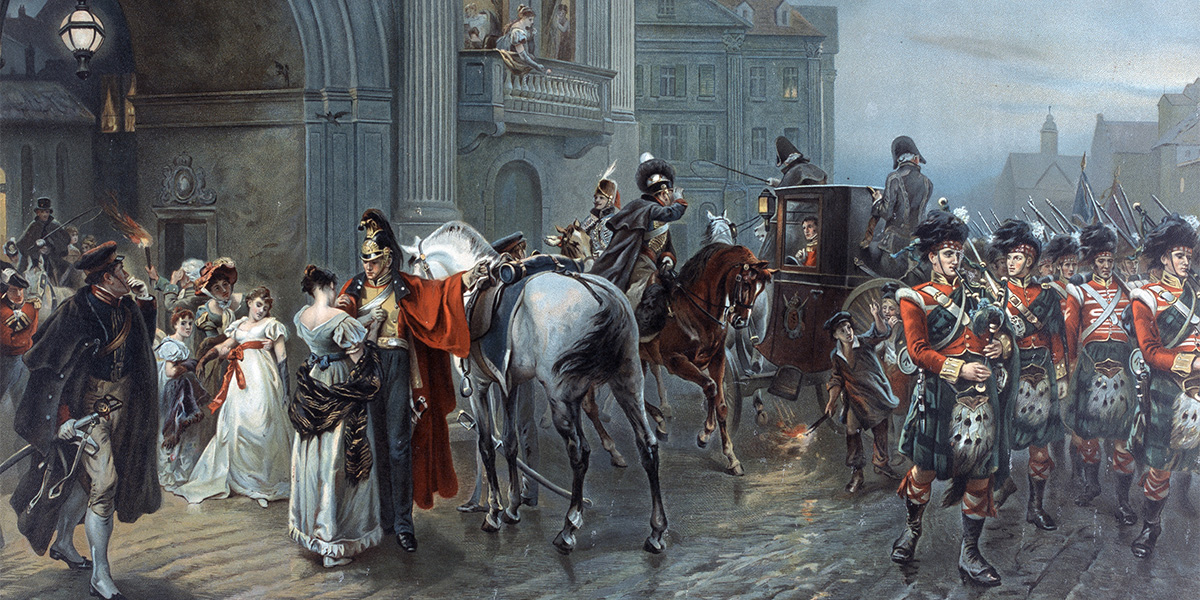
Lady Butler's 'Dawn of Waterloo' (1895) depicting the Scots Greys on the morning of the battle, 1815 (Purchased with the assistance of the Art Fund)
Retreat to Waterloo
Pursued by Napoleon’s main force, Wellington fell back towards the village of Waterloo. Unknown to the French, the defeated Prussians were still in good shape. They retreated north towards Wellington’s position and were able keep in contact with him.
The 48,000-strong Prussian Army was experienced and professional, a mix of veteran, militia and reserve units. Its strength lay in the officer corps, especially its General Staff, who managed to reorganise the army and move it to Waterloo within 48 hours of its defeat at Ligny.
Emboldened by their promise of reinforcements, Wellington decided to stand and fight on 18 June until the Prussians could arrive.
The Little Corporal
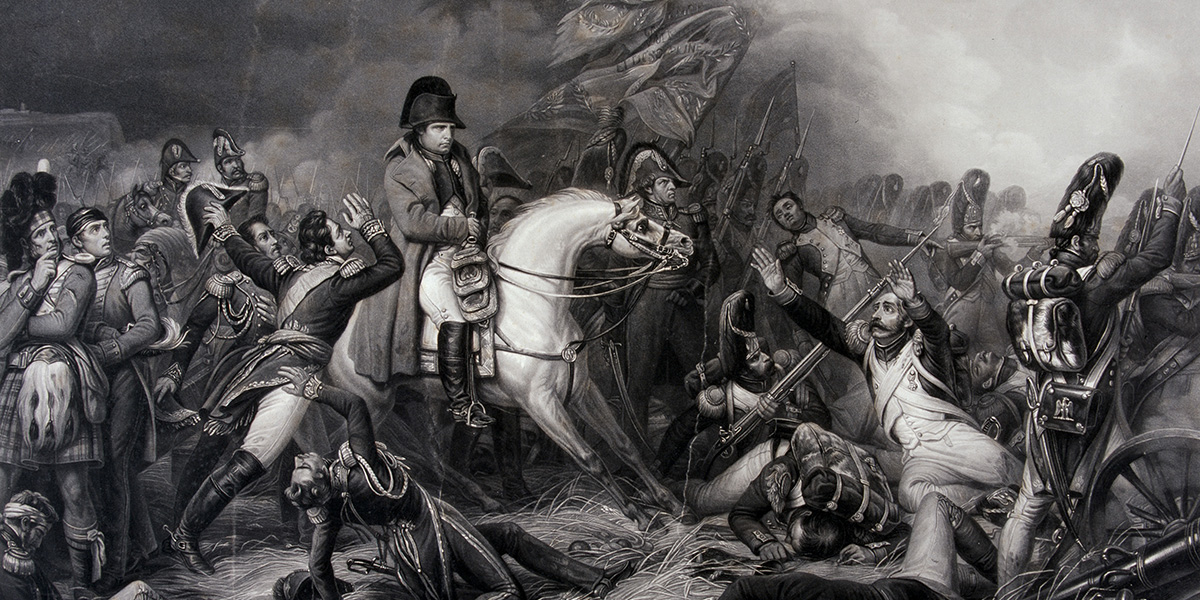
The French Army had their greatest military commander in Napoleon Bonaparte. He was loved by his loyal troops, demonised by his enemies, feared and respected by all.
His army was composed of veterans who had rallied to his cause on his return from exile. Having detached 33,000 men to follow the Prussians after Ligny, Napoleon had 72,000 men and 246 guns at Waterloo.
Wellington also accepted that Napoleon’s presence on the battlefield made a huge difference to the morale and performance of his troops.
The Anglo-Allied army had 68,000 men and 156 guns. The men were a blend of inexperienced troops and veterans of the Peninsular War (1808-14). With such a mixed force, there was no question of Wellington going on the offensive.

Positions
Wellington drew up his army along a ridge of Mount St Jean. Using tactics that he had perfected during the Peninsular War, he positioned most of his forces behind the ridge, so they were out of sight of the enemy and sheltered from artillery fire. The rest of his army guarded three outposts in front of the ridge.
To the west stood the Chateau of Hougoumont, which Wellington garrisoned with British Guardsmen and German Light Infantry. In the centre was the farm of La Haye Sainte, defended by more Germans and British riflemen. At the east end of the ridge lay the hamlet of Papelotte, occupied by German Duchy of Nassau troops.
Napoleon’s plan was simple. He would conduct a diversionary attack against Hougoumont. Then, once Wellington had sent reinforcements there, a main attack against the bulk of the Anglo-Allied army would begin.
Let battle commence
At 11.30am, following a huge artillery bombardment - partly negated by Wellington’s position and the wet ground - Napoleon launched his diversionary attack against Hougoumont.
The French cleared the wood in front of the chateau, but were shot down as they left its shelter. A small group broke in via the north gate, which had been left open to facilitate resupply. But the defenders managed to shut the gates and kill them. The chateau remained in British hands all day.
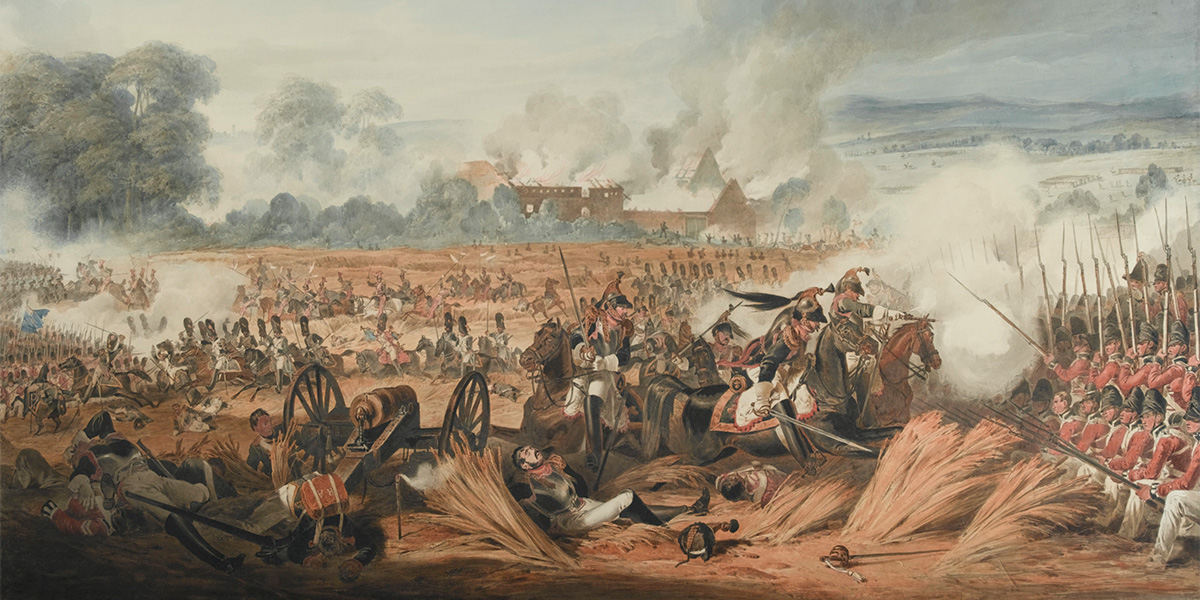
Two hours later, the French attacked the Allied left centre. They drove back the Dutch-Belgians. But as they crested the ridge, they were stopped by British infantry and then faced a counter-attack by British heavy cavalry.
The cavalry routed the French infantry, but carried their charge too far. They were then counter-attacked themselves by the French cavalry and cut to pieces.
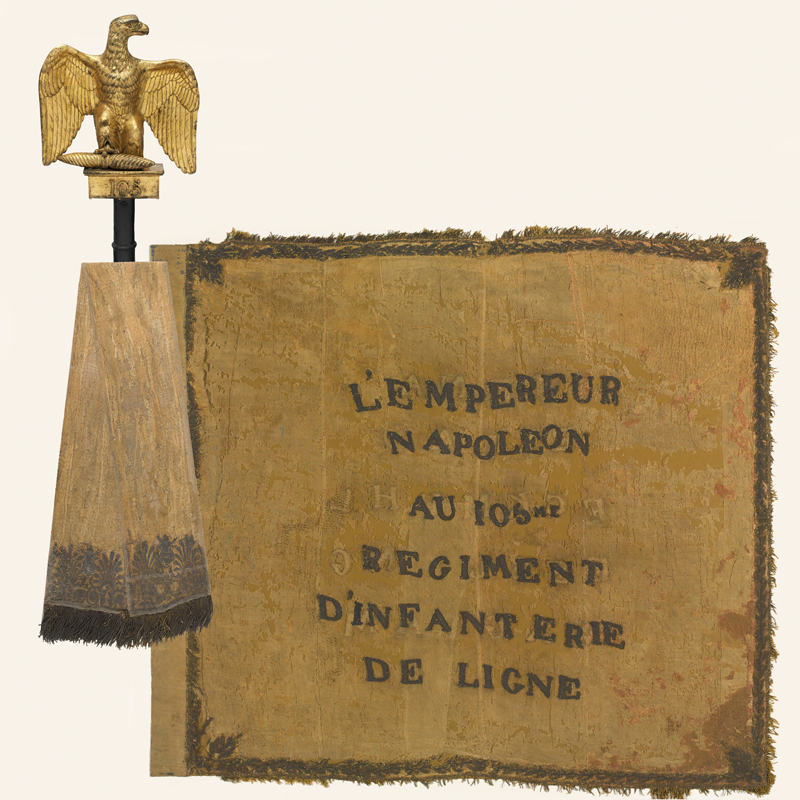
Eagle standard
This French eagle standard was captured during the battle. It was one of nearly 100 presented by Napoleon to his army in 1815 to replace those which had been destroyed during his exile.
During the British heavy cavalry charge, Captain Alexander Kennedy Clark killed the French soldier carrying the standard, and Corporal Francis Stiles retrieved it. Although the pair disputed each other’s roles in its capture, both were later credited.
You can see the standard on display in our Conflict in Europe gallery.
The Prussians arrive
By mid-afternoon, news of the Prussians' arrival forced Napoleon to form a defensive line on his right. Soon afterwards, believing the Allies were pulling back, the French cavalry charged the infantry of Wellington’s right centre who formed square.
Although more cavalry were committed to attack, the soggy ground hampered the French. They could not make an impression on the British squares, which held firm despite suffering casualties from artillery fire.
Meanwhile, the Prussians continued to arrive on Napoleon’s right, forcing him to detach more troops to steady the situation. At about 6.00pm, the French captured La Haye Sainte, severely weakening Wellington’s position.
Under withering fire, Wellington’s centre began to collapse. The French commander Marshal Ney called for reinforcements to push home his advantage. But Napoleon decided first to send troops to recapture the village of Plancenoit from the Prussians. This gave Wellington time to strengthen his position.
Defeat of the Imperial Guard
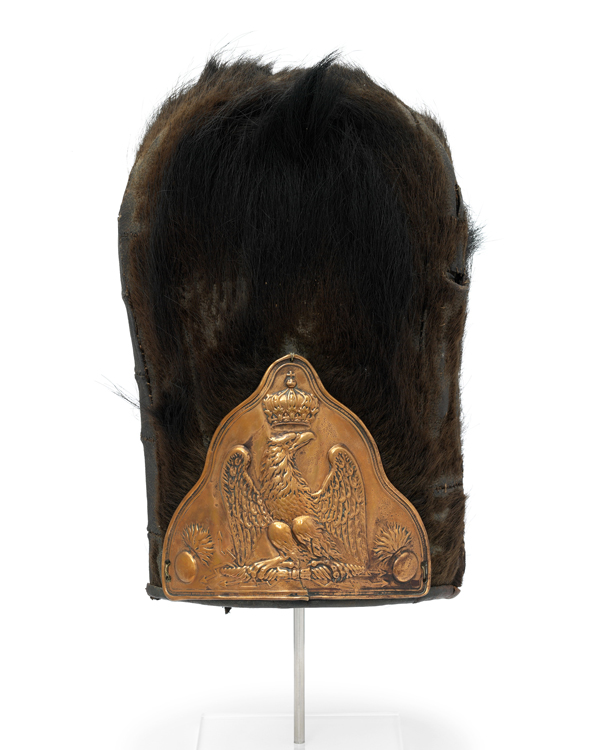
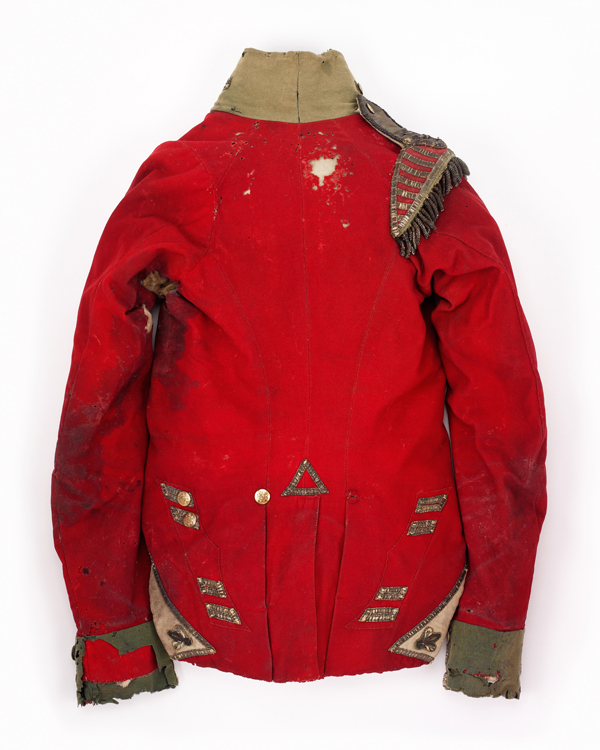
At about 7.00pm, in a last bid for victory, Napoleon released his finest troops, the Imperial Guard. They marched up the ridge between Hougoumont and La Haye Sainte, but had chosen to attack where Wellington was strongest. Under a withering fire from British guardsmen and light infantry, the Imperial Guard halted, wavered and finally broke.
Their defeat sent the rest of the French into panic and, eventually, retreat. This continued all night, with the French harried by the Prussian cavalry. Napoleon lost nearly 40,000 men killed, wounded or captured. The Allies suffered 22,000 casualties.
Napoleon was defeated. He spoke of fighting on, but was forced to abdicate when the Allies entered Paris on 7 July. He spent the rest of his life in exile on the island of St Helena in the South Atlantic.

‘My heart is broken by the terrible loss I have sustained in my old friends and companions and my poor soldiers. Believe me, nothing except a battle lost can be half so melancholy as a battle won.’Duke of Wellington — 1815

The Duke of Wellington at Waterloo, 1815
15 June 1815
Napoleon’s army invades Belgium
Two armies face him: a Prussian army under Field Marshal Blucher and a multi-national force under the Duke of Wellington.
16 June
Battles at Ligny and Quatre Bras
Wellington’s army holds off the French at Quatre Bras. But the main French army defeats the Prussians at Ligny. The Prussians retreat.
17 June 1815
Retreat to Waterloo
The Prussian withdrawal obliges Wellington to retreat as well. He falls back to a ridge near the village of Waterloo. Wellington plans to fight there until the Prussians come to his aid.
18 June 1815
Battle of Waterloo
Wellington’s army beats off a succession of French attacks. The arrival of the Prussians completes Napoleon’s defeat.
7 July 1815
Paris occupied
The victorious allies enter Paris. Napoleon surrenders to the British and is exiled to St Helena.
Impact
The Duke of Wellington received a hero's welcome on his return to Britain. He was showered with further honours, eventually becoming prime minister in 1828, and again in 1834.
Waterloo ended the wars that had convulsed Europe since the French Revolution (1789-99). It also ended France’s attempts, whether under Louis XIV or Napoleon, to dominate the continent.
Waterloo inaugurated a general European peace that, apart from the brief interruption of the Crimean War (1854-56), lasted until 1914. In the years that followed 1815, France and Britain were brought closer together, fighting as partners in the Crimea and remaining allies through two World Wars.
Lion’s Mound
Battlefield tours of Waterloo started immediately after the campaign and continue to this day. Among the attractions is the Lion’s Mound, built by King William I of the Netherlands in 1820 on the spot where he believed his son the Prince of Orange had been wounded.
Visible for miles around, the mound dominates the area. Many other memorials dot the surrounding landscape.
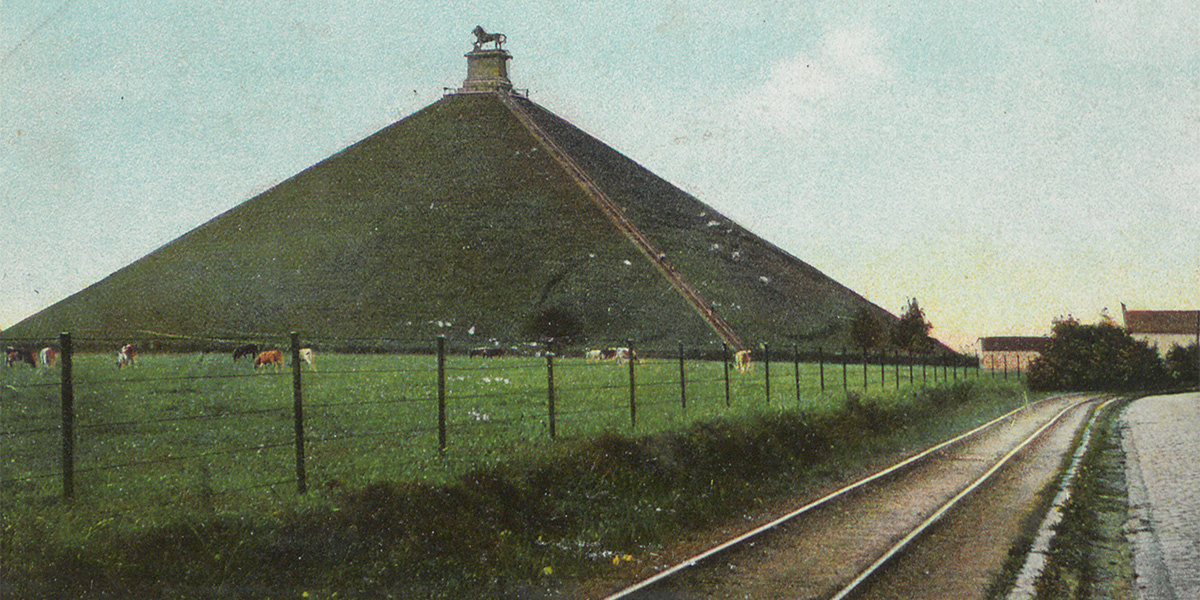
Lion's Mound depicted on a souvenir postcard, 1908
A legendary limb
Another monument, that no longer exists, belonged to General Henry Paget, Lord Uxbridge. He led a series of cavalry charges at the battle, but was wounded in the right leg by one of the last cannon shots of the day.
Uxbridge was taken back to his headquarters, a farmhouse in the village of Waterloo, where surgeons amputated the limb. He is reported to have remained composed throughout the painful procedure, apparently even asking: ‘Who would not lose a leg for such a victory?’
After the operation, the farmhouse owner, Monsieur Paris, asked if he could keep the leg. He buried it in his garden and created a shrine, complete with a headstone. The grave of Uxbridge's leg became a popular tourist attraction and earned Monsieur Paris and his descendants a healthy income!
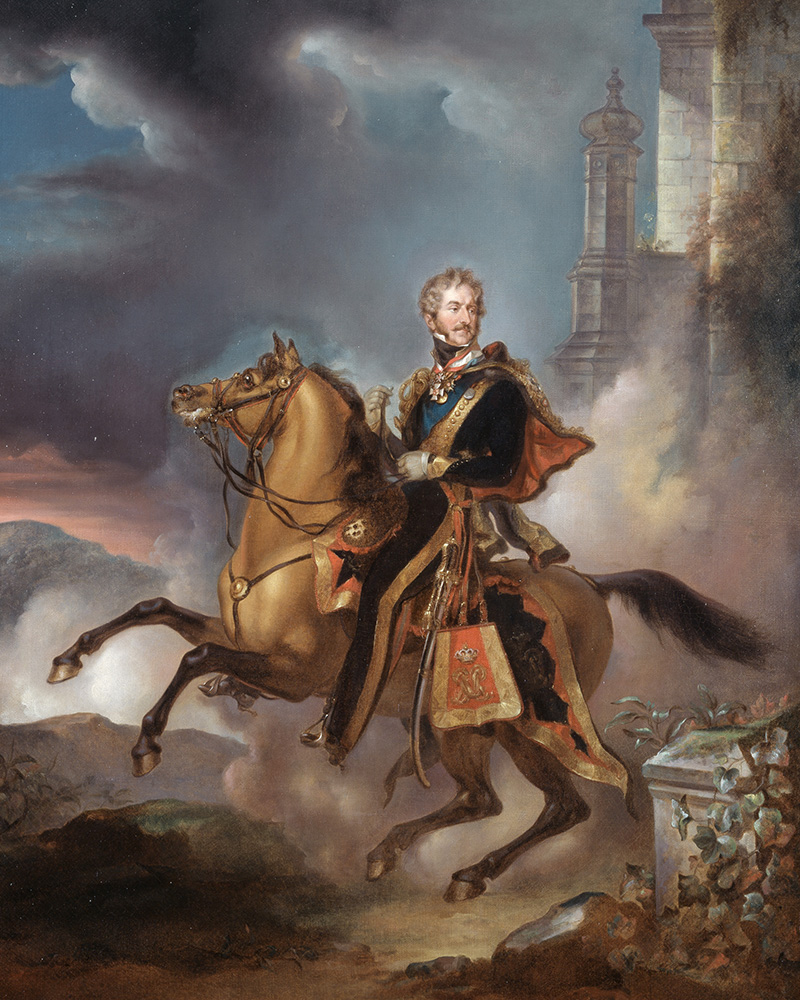
Uxbridge: ‘By God, sir, I've lost my leg!’ Wellington: ‘By God, sir, so you have!’Exchange between Lord Uxbridge and the Duke of Wellington at Waterloo — 1815

Legacy
Throughout Britain and the Commonwealth, Waterloo has been commemorated in the names of streets, railways stations, bridges and parks.
The name 'Waterloo' itself has entered the English vocabulary. A person who has been defeated after a run of success is said to have 'met their Waterloo'.
Performed by the Swedish pop group Abba, the winning entry in the 1974 Eurovision Song Contest was based on this phrase. The song is about a girl who has to surrender to the demands of her conqueror, just like Napoleon at the Battle of Waterloo.
Waterloo, I was defeated, you won the war / Waterloo, promise to love you for ever more / Waterloo, couldn't escape if I wanted to / Waterloo, knowing my fate is to be with you / Waterloo, finally facing my Waterloo'Waterloo' by Abba — 1974

Explore further
Marengo’s makeover
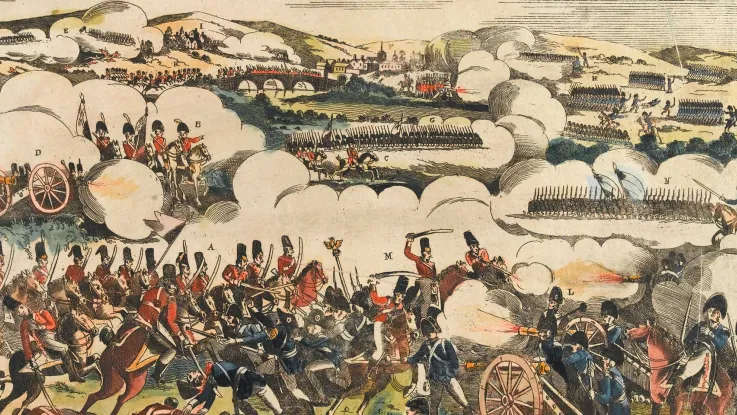
Battle of Salamanca
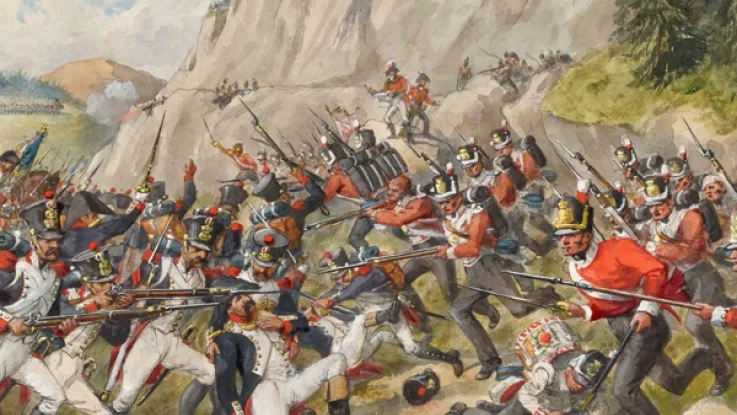
Peninsular War