Rival alliances
The First World War saw the Entente Powers - led by France, Russia, the British Empire, and later Italy (from 1915) and the United States (from 1917) - defeat the Central Powers - led by the German, Austro-Hungarian, Bulgarian and Ottoman Empires. Russia withdrew from the war after the revolution there in 1917.

The Western Front
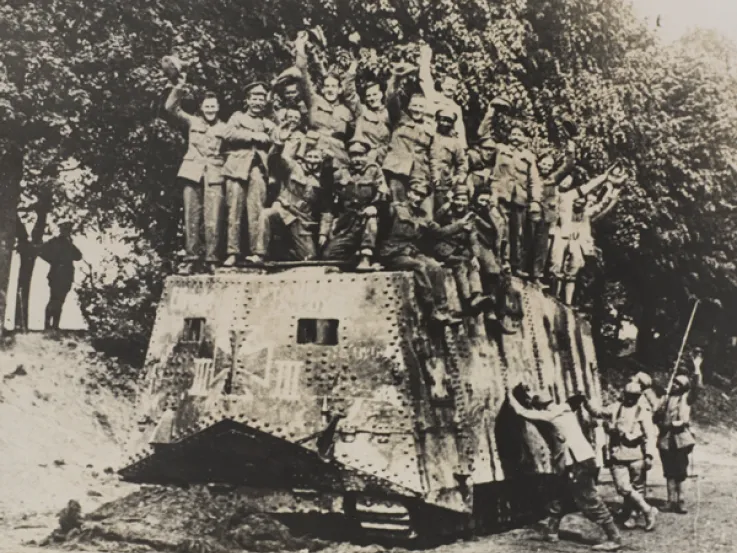
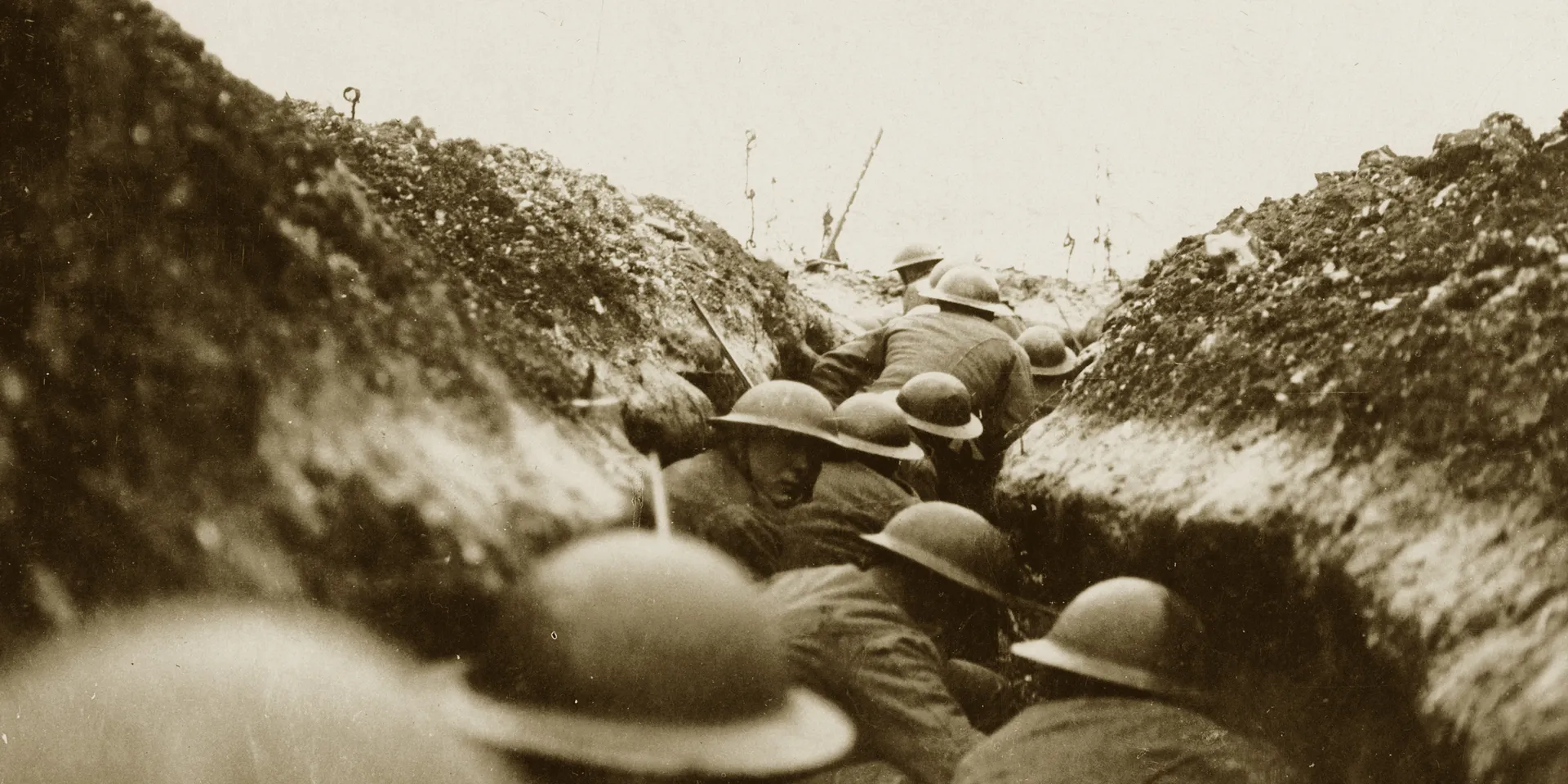
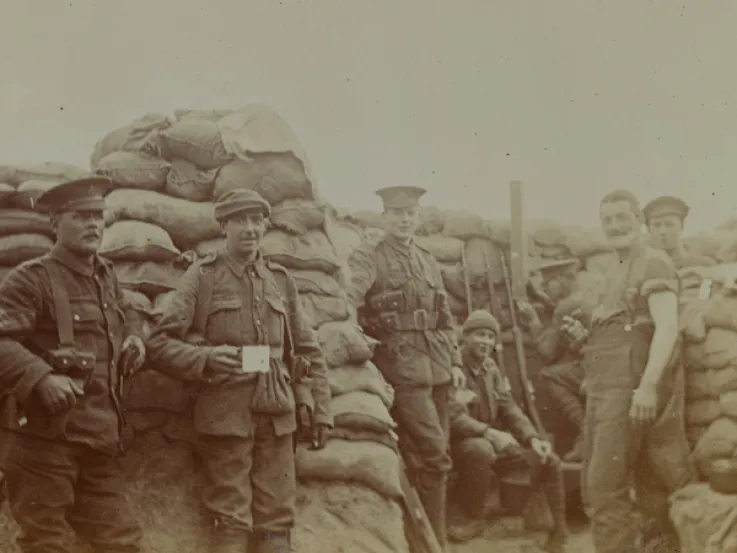
On the battlefields of northern Europe, the British Empire fought against the enemy and the elements along a system of trenches that stretched over 600km (370 miles) from the Channel to the Swiss frontier.
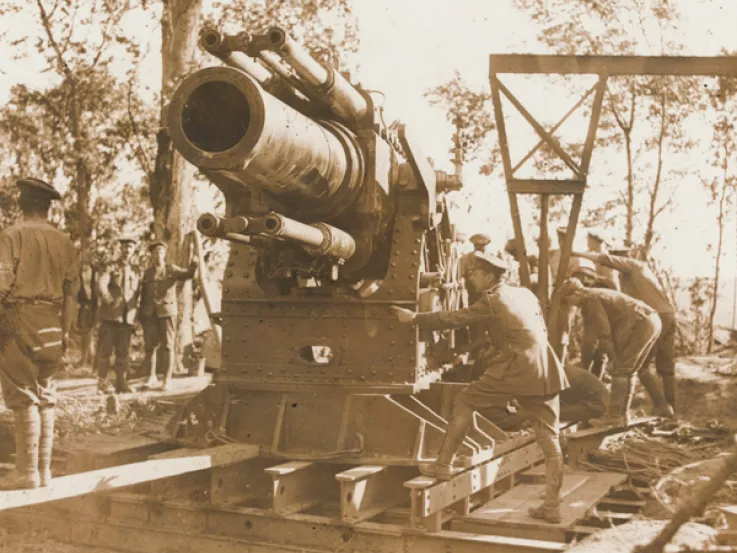
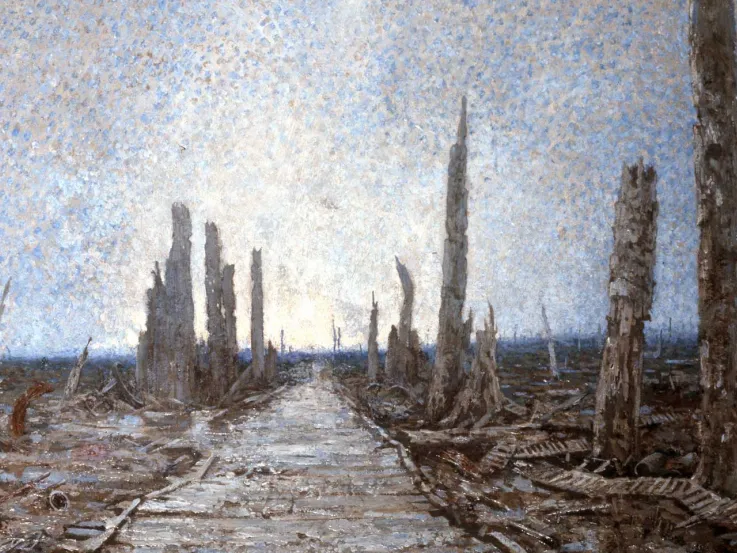
The attritional struggle here transformed the landscape of northern France and Belgium into a lunar mud-scape of shell craters, corpses, abandoned equipment and wire entanglements. Commanders faced the tactical problem of getting troops safely across this fire-swept terrain to penetrate the enemy’s defences.
For most of the war, the front here was locked in stalemate, despite a series of costly offensives. This bitter struggle to overcome the deadlock defined the conflict for many involved. It also decided its outcome, with an Allied breakthrough finally defeating the Germans in 1918.

The Middle East
The Middle East was the largest theatre of the First World War, and saw the British Empire and France fight against the Ottoman Empire in Mesopotamia (now Iraq), Gallipoli, Sinai and Palestine, and Persia.
On the whole, the campaigns here were more mobile, as each side attempted to seize and defend key objectives for control over Middle Eastern territories.
Some troops had to endure the unforgiving desert environment, where disease was rife and temperatures could soar or plummet. It's hard to imagine a more difficult place to fight as it also created logistical and tactical problems for the armies involved.

Other theatres
Fighting also raged in the Balkans, where the British and French helped their Serbian ally engage the Bulgarians. In 1917, the same two powers despatched troops to assist the Italians in their fight against the Austrians.
In Africa, the British seized enemy colonies before fighting a long war against German guerrillas. Meanwhile, in Eastern Europe, the Russians battled the Germans and Austrians, while simultaneously fighting the Ottomans in the Caucasus.

The war in the air
For the first time, battles took place in the air as well as on land. Aircraft, a new technology at the time, opened up a whole new theatre of war.
The British Army established a corps of men to fly these new machines - the Royal Flying Corps. But it was only through experience that they learnt how important a role they could play.
Control of the skies had an impact on the war on the ground. Troops could gather intelligence on enemy positions and direct artillery. But as the war unfolded, so too did the tactics of aerial warfare, including dog fighting, ground strafing and strategic bombing.

The war at sea
Fierce fighting also took place at sea. Naval offensives blurred the lines of combat. Attacks by surface vessels and submarines, alongside blockades of ports, affected both military personnel and civilians.

Allied delegates at the Versailles peace conference, 1919
Outcome
The conflict brought an end to a world order that had existed since the end of the Napoleonic Wars (1803-15). It caused the disintegration of four empires - the Austro-Hungarian, German, Ottoman and Russian - and was a key factor in the outbreak of the Second World War (1939-45).
First World War in Focus
Explore our microsite, marking the centenary of the First World War. We uncover the national and global impact of the fighting, and tell the story of people from across the United Kingdom whose lives were affected by the conflict.
Explore further
1914: To arms
1914: Mons to Christmas
1916: Year of attrition
1917: Year of stalemate