National Army Museum acquires remarkable new soldier accounts from the Napoleonic Wars

30 July 2026
The National Army Museum has acquired three significant archival collections containing important first-hand accounts of the Napoleonic Wars, including the Battle of Waterloo: one of the most momentous engagements in European history. Together, they bring hundreds of pages of first-hand testimony into public care, preserving these remarkable accounts for future generations while supporting new research into one of the defining conflicts of the 19th century.
These acquisitions have been made possible through the generous support of the Friends of the Nations' Libraries (FNL) and a group of donors brought together by Napoleonic historian Gareth Glover.
These collections contain a wealth of detail and reveal not only the realities of campaigning and combat, but also the thoughts, feelings and experiences of the men who lived through these historic events.
The acquisitions deepen the National Army Museum's ability to tell the story of the Napoleonic Wars through authentic eyewitness accounts, while ensuring these remarkable documents are cared for and made accessible to the public.
One of the most important additions is a vivid account of the Waterloo campaign written by Lieutenant and Captain Henry Weyland Powell of the 1st Regiment of Foot Guards (later the Grenadier Guards).
Purchased with the generous support of the Friends of the Nations' Libraries, Powell's letter relates events from the fierce fighting at Quatre Bras on 16 June 1815 through to Napoleon's final defeat at Waterloo two days later. The document is further enhanced by a sketch map of the battle drawn by Powell himself.
In one striking passage, Powell recalled the French bombardment:
'During the cannonade the shot and shells which went over the artillery, fell into our squares, and I assure you I never was in a more awful situation.'
In another, Powell describes the defeat of the French Imperial Guard at the climax of battle:
'We allowed them to come within about a hundred yards, when we opened so destructive a fire, that there were soon about three hundred of them on the ground, and they began to waver; we immediately charged but they ran as fast as possible.'

Justin Saddington, Archives and Library Curator at the National Army Museum, said:
'These collections allow us to hear directly from the soldiers who experienced the Napoleonic Wars. Their letters capture moments of fear, resilience and humanity that rarely survive in official records, helping us better understand both the battles themselves and the people who fought them. They are a wonderful addition to the Museum's archive and will be an invaluable resource for researchers, students and anyone interested in this remarkable period of history.'
The other two collections relate to Lieutenant Colonel Charles Wood of the 52nd (Oxfordshire) Regiment of Foot (Light Infantry), the 68th (Durham) Regiment of Foot (Light Infantry) and the 10th (Prince of Wales's Own Royal) Regiment of Light Dragoons (Hussars).
Purchased with the generous support of Gareth Glover, the Waterloo Association and other benefactors, the collections comprise nearly 200 letters written by Wood to his brother, Colonel Thomas Wood, between 1809 and 1826.
Spanning more than 800 pages, the correspondence covers the Peninsular War and Waterloo campaigns and Wood’s military mission to Germany with Lord William Stewart in 1814. Frequently written close to the action, the letters provide an immediate and dramatic perspective on events as they unfolded. They also cover a broad range of subjects, including his fellow officers, politics, strategy and war news.
In one moving letter, Wood mourns the death of his commanding officer, Major General Robert Craufurd, who was killed at the Siege of Ciudad Rodrigo in 1812, concluding:
'You cannot conceive how much the men lament poor Craufurd.'
Among the most personal passages is Wood's matter-of-fact description of being wounded during the Battle of Waterloo:
'I got hit just as the Duke moved to attack them & bled like pig.'

Together, these collections offer exceptional opportunities for research and public engagement. By bringing hundreds of pages of first-hand testimony into the Museum's archive, they enrich its ability to tell the story of the Napoleonic Wars through the words of those who experienced them, helping modern audiences connect with the people behind some of history's most significant battles.
Napoleonic Wars historian Gareth Glover said:
'The sheer size and scope of this collection of letters from Charles Wood makes it one of the largest and most important collections of letters from the Napoleonic wars to emerge for a very long time. I was delighted that my Napoleonic friends and the Waterloo Association members supported the appeal to purchase this fantastic collection and that together with Justin Saddington of the National Army Museum we were able to successfully co-ordinate our attempt to purchase them for the nation in perpetuity. I now look forward to being able to transcribe and publish this historic account.'
Dr John Morewood, Hon Secretary The Waterloo Association, said:
'We are delighted both as an Association and a collection of individuals to have worked with the National Army Museum to secure this important collection. It can now be used by researchers rather than being split up and sold off piecemeal which would have meant its context and real value would have been lost to the historical world.'

Archive Service Accreditation
The acquisitions come as the National Army Museum celebrates the successful retention of Archive Service Accreditation, the UK-wide standard for archive services administered by The National Archives. Accreditation recognises archive services that demonstrate excellence in the preservation, management and accessibility of collections and reflects the Museum's ongoing commitment to safeguarding military history and making it available to the widest possible audience.
Justin Maciejewski, Director of the National Army Museum, said:
'Archives allow us to hear directly from the people who lived through history. Retaining Archive Service Accreditation is a tremendous achievement for the Museum and recognises the expertise and dedication of the team that cares for these nationally significant collections.
'I'm delighted that these remarkable new acquisitions will now be preserved, studied and shared with future generations, helping more people discover the stories of the soldiers who witnessed some of the defining events of the Napoleonic Wars.'
The newly acquired material is currently undergoing further cataloguing and research.
A carefully selected group of documents will go on display at the National Army Museum from 30 July 2026, offering visitors a rare opportunity to see some of these remarkable first-hand accounts in person. Because of their age and fragility, only a small number of items can be displayed at any one time and only for limited periods, helping to ensure their long-term preservation for future generations.
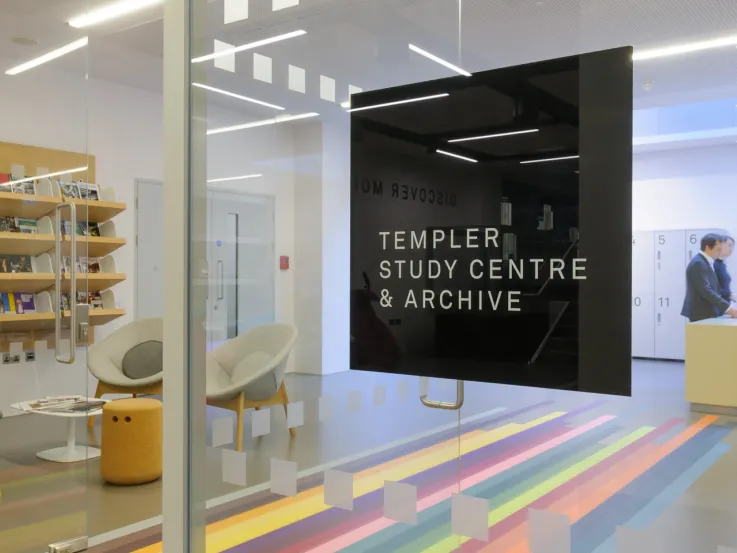
Following further cataloguing and research, researchers, students and members of the public will be able to consult the original documents through the National Army Museum's Templer Study Centre by appointment, supporting future scholarship and opening these remarkable first-hand accounts to new audiences.
The Museum hopes the collections will inspire new scholarship, support future research and allow more people to discover the stories of the soldiers whose lives shaped one of the defining periods of British and European history.
For information about accessing the collections, visit the Templer Study Centre.
Note to editors
For more information and images, please contact:
- National Army Museum Communications Team: press@nam.ac.uk
Join in the conversation on:
- X: @NAM_London
- Facebook: facebook.com/NationalArmyMuseum
- Instagram: @nam_london
National Army Museum
The National Army Museum shares the history and heritage of our soldiers and their service in the Army, across the globe and down the centuries. Through our collections we explore the history of the Army from its origins to the present day. We aim to engage and inspire everyone with the stories of our soldiers and how their service shapes our world; past, present and future.
Friends of the Nations' Libraries
Friends of the Nations' Libraries (FNL), formerly Friends of the National Libraries, has helped to save the UK’s written and printed history since its foundation in 1931. FNL awards grants to national, regional and specialist collecting libraries enabling them to acquire rare books, manuscripts, literary archives, fine bindings and estate archives that would otherwise be lost to the public domain and, in very many cases, to the nation. In 2021 FNL raised £15m to save the Blavatnik Honresfield Library for the nation, donating every manuscript and book to nearly 70 UK libraries and archives.
www.fnl.org.uk | admin@fnlmail.org.uk
Waterloo Association
The Waterloo Association with over 730 members worldwide is the UK's leading organisation dedicated to improving understanding of the period of the French Revolutionary and Napoleonic Wars, including the life of the Duke of Wellington and The Battle of Waterloo. It produces new research and campaigns to preserve relevant sites and memorials including the iconic battlefield of Waterloo.
Further details can be found at www.waterlooassociation.org.uk
Explore further

Press releases