
The Halfmoon Camp
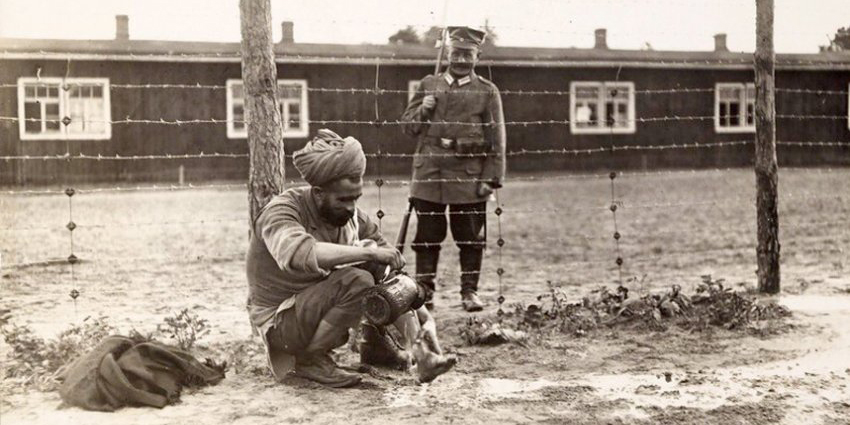
Discover the long-forgotten story of the Halbmondlager, where prisoners from across the British, French and Russian Empires were held captive during the First World War.
The Halbmondlager, or Halfmoon Camp, was established in the German town of Wünsdorf as part of an ambitious propaganda campaign to persuade captured Allied soldiers to change sides and support the German war effort.
The camp housed several thousand prisoners, primarily Muslim soldiers recruited from Britain and France’s colonial territories in Africa and South Asia. Among them were members of the Indian Army, including soldiers from the Lahore Division depicted in our latest exhibition, Drawn on the Western Front.
Compared with other prisoners of war, those held at the Halbmondlager generally received more favourable treatment and greater religious freedom. This was deliberately tied to German efforts to influence and recruit them.
This talk will explore the creation of the camp and the experiences of those held captive there. It will also consider why this fascinating aspect of the First World War has been overlooked for so long.
About the speaker
Thomas Mcloughlin is the Engagement Officer at the National Army Museum. He holds a master’s degree in Public History and has a specific interest in the intersection of culture and society and the armed forces.


