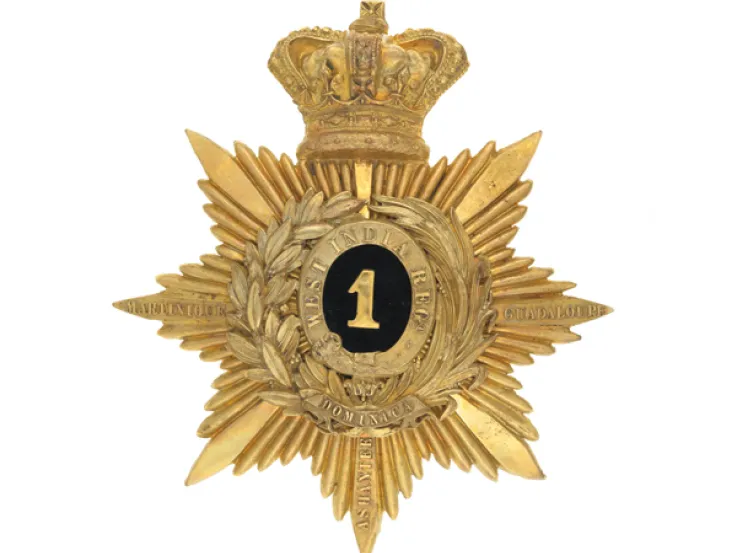
Mutiny, Desertion and Negotiation in the West India Regiments

Isaac Crichlow analyses court martial records from the French Revolutionary and Napoleonic Wars to reveal the experiences of soldiers in the West India Regiments.
Drawing on general court martial records of the late 18th and early 19th centuries, historian Isaac Crichlow will highlight the differences in the treatment of European and African soldiers in the British Army.
He will use the data to assess patterns of military crimes and punishments, for both officers and enlisted men, at different times and within different regions. By doing so, the experiences of soldiers in the West India Regiments can be contextualised.
Through this comparative analysis of military justice, he will demonstrate the racialised structures of military governance and the contested loyalties of Black soldiers within slave society.
About the speaker
Isaac Crichlow is a historian of the Caribbean and the British Empire in the late 18th and early 19th centuries. His research examines slavery, military labour and resistance, with particular focus on the West India Regiments - units composed of formerly enslaved African soldiers in British service.
Isaac has contributed to public history initiatives, including a research placement with Fulham Palace Trust which informed the exhibition 'The Bishops of London, Colonialism and Transatlantic Slavery: Resistance'.
Explore further