Unofficial roles
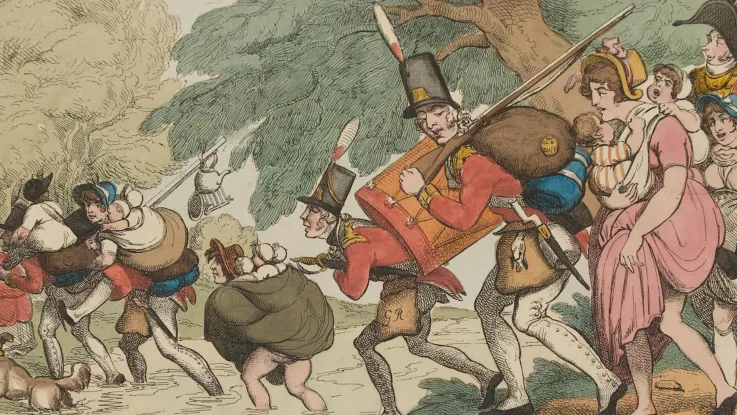
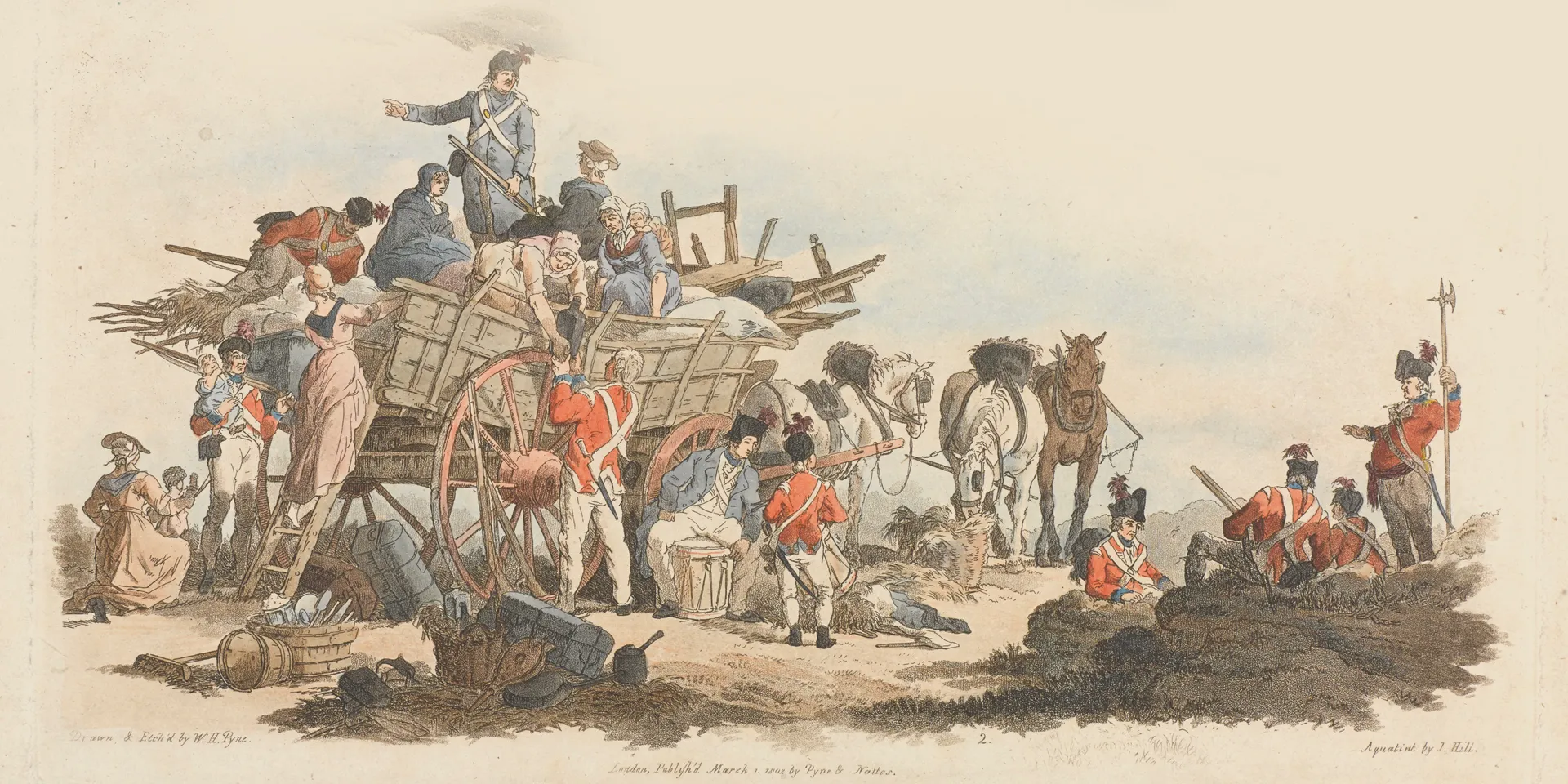
For centuries, women have shaped and been shaped by the British Army. Until the 1850s, many lived and worked alongside the soldiers of a regiment, sometimes accompanying them abroad, performing a wide range of unofficial roles. Some were wives and family members; others worked as cooks, nurses, midwives, seamstresses and laundresses. Some were sex workers.
At the time, war was considered men’s work, but women played a significant role in supporting the physical and emotional wellbeing of soldiers. While rare, there were several cases of women disguising themselves as men in order to fight.
1639-51
Civil Wars of Britain
King Charles I drafts a proclamation clause banning women from wearing military clothing, suggesting that many were disguising themselves as soldiers. Meanwhile, women like Lady Mary Bankes and Katherine Murray lead the active defence of their estates against military siege and political sequestration.
1688-1713
Nine Years War and War of the Spanish Succession
Christian 'Kit' Cavanagh disguises herself as a male soldier to take part in the campaigns of King William III and the Duke of Marlborough.
1740-48
War of the Austrian Succession
Hannah Snell disguises herself to serve as a marine, taking part in the capture of the French colony of Pondicherry in August 1748 and later fighting at the Battle of Devicotta.
1815
Battle of Waterloo
Several women accompany the Anglo-Allied army into action at Waterloo. A handful are found dead on the field in the aftermath of the battle.
1813-64
A surgeon of the Empire
Dr James Barry has a distinguished career as an Army surgeon. On his death, he is discovered to have been born a woman.
Nursing
With the ongoing professionalisation of the Army in the second half of the 19th century, women found themselves increasingly excluded from service. However, one area where women's involvement flourished was through nursing.
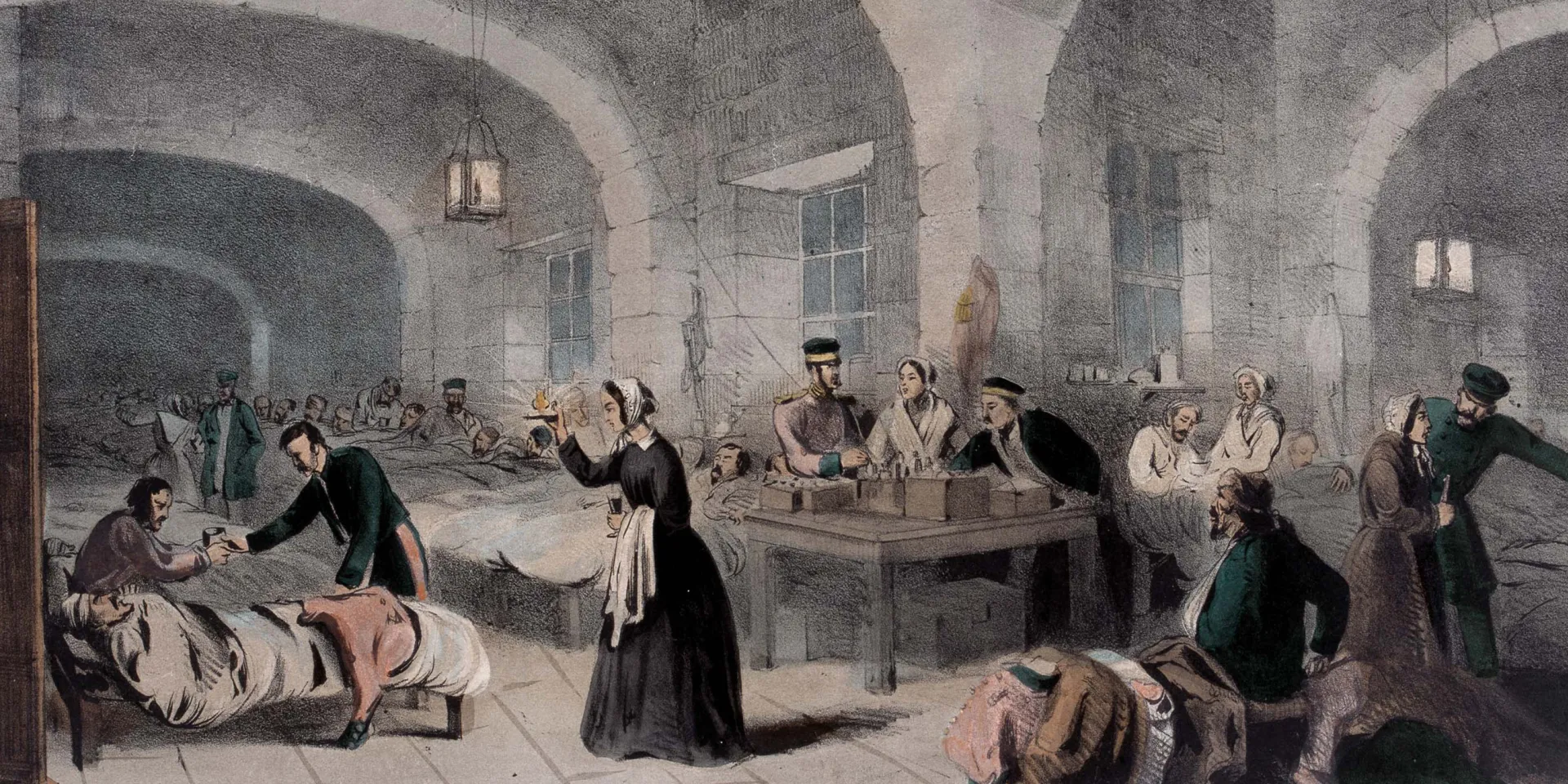
Women like Florence Nightingale and Mary Seacole revolutionised nursing during the Crimean War (1854-56) and established its necessity. Professional, trained nurses returned to the battlefield in later conflicts and organisations were created to formalise their work.
1855
The Lady with the Lamp
Florence Nightingale travels to Crimea with her nurses to care for the wounded. Her work there sets the standards for modern nursing.
1881
Army Nursing Service
The Army Nursing Service (ANS) is established. It begins to professionalise years of nursing contributions to the Army, but remains outside the formal Army structure.
1899-1902
Queen Alexandra's Imperial Nursing Service
Queen Alexandra's Imperial Nursing Service (QAIMNS) is established during the Boer War, replacing the ANS. Women from across the British Empire serve in it.
1907
First Aid Nursing Yeomanry
The First Aid Nursing Yeomanry (FANY), a mounted auxiliary nursing unit, is established. Mainly comprising women from the social elite, it provides a vital first-aid link between fighting units and field hospitals. As well as running hospitals, FANY members drive ambulances and operate soup kitchens and canteens.
War work for women
During the early 1900s, several quasi-military volunteer groups for women's work were established including the Women's Emergency Corps, the Women's Forage Corps, the Women's Defence Relief Corps and the Women's Land Army.
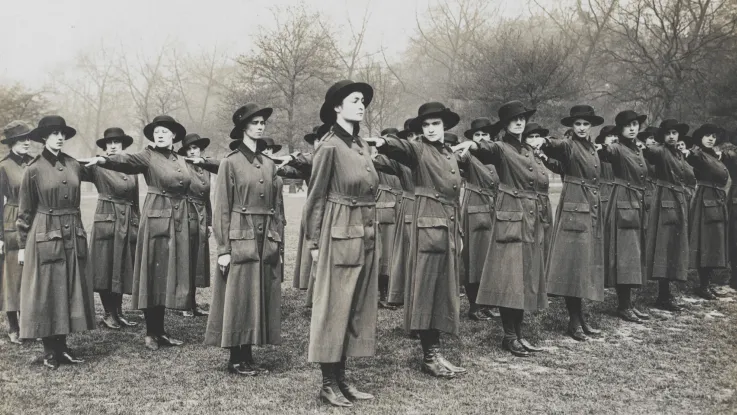
The outbreak of the First World War (1914-18) provoked a debate on women's roles in the conflict. The economic strain of the war meant that women were already working on the Home Front in factories. And volunteer groups like the Women's Legion cooked for the troops. Owing to manpower problems, the Army started looking for more formal ways to bring women into the fold.
21 July 1915
Jobs for women!
Suffragettes march in London to persuade the authorities to widen women’s roles in the First World War.
Summer 1916
Manpower problems
The heavy losses suffered during the Battle of the Somme prompt the High Command to consider using women in supporting roles so that men can be freed up for combat.
Spring 1917
Women on the Western Front
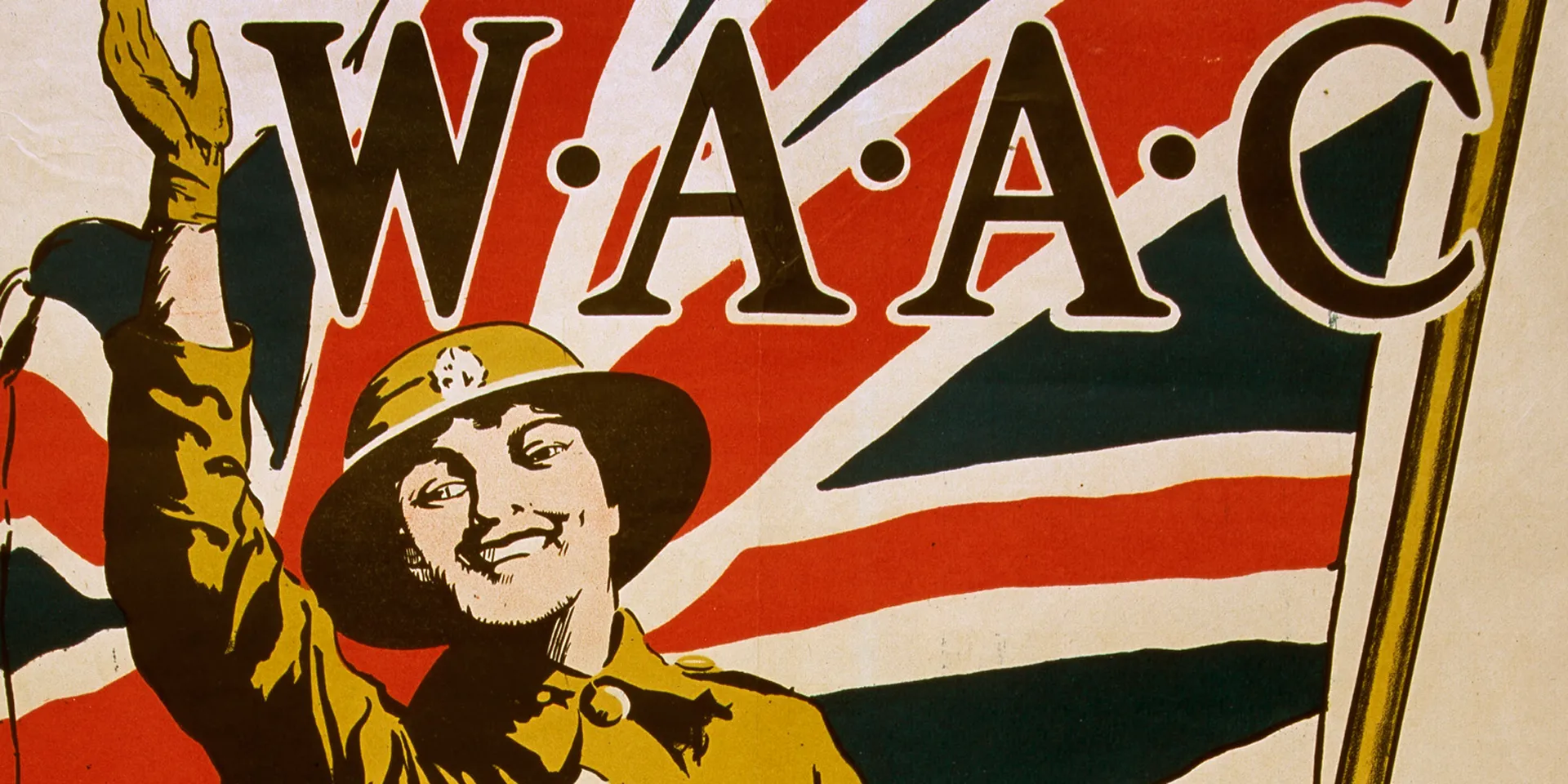
The Women’s Army Auxiliary Corps (WAAC), headed by Controller Alexandra Chalmers Watson, is formed in response to the manpower crisis. The first women arrive to carry out support duties in France and Belgium on 31 March 1917.
1917-18
WAACs at war
Members of the WAAC continue to serve in support roles. Over the course of the war, more than 100,000 women serve in military and auxiliary organisations, far exceeding expectations.
1918
Controller Alexandra Chalmers Watson resigns
Chalmers Watson resigns after a media storm over supposed moral impropriety among the WAAC in France, and after struggling to secure equal pay for women.
6 February 1918
British women given the vote
The Representation of the People Act 1918 gives the vote to women over 30 who meet certain property qualifications.
April 1918
Queen Mary's Army Auxiliary Corps
In recognition of the WAAC's hard work and bravery during the Spring Offensive, Queen Mary becomes its patron, lending it her name.
Interwar years
The interwar years saw a tension between women's newfound emancipation and calls for their return to the domestic sphere. As veterans continued to identify with their wartime service, there were also developments in preparing women for future war.
1919
Old Comrades
The Old Comrades' Association is established for veterans of Queen Mary's Army Auxiliary Corps (QMAAC). It produces a journal for members, which advertises opportunities and social events.
September 1921
Disbandment of QMAAC
After staying on in France to help with post-war clean-up operations, QMAAC is formally disbanded.
2 July 1928
Equal franchise
The 1928 Equal Franchise Act gives the vote to all women over the age of 21.
1935
Emergency Service
Dame Helen Gwynne-Vaughan plays a key role in establishing the Emergency Service, an officer training corps for women intended to prepare for the possibility of future war. Drawn mainly from the social elite, many of its members go on to take up leadership roles during the Second World War.
Second World War
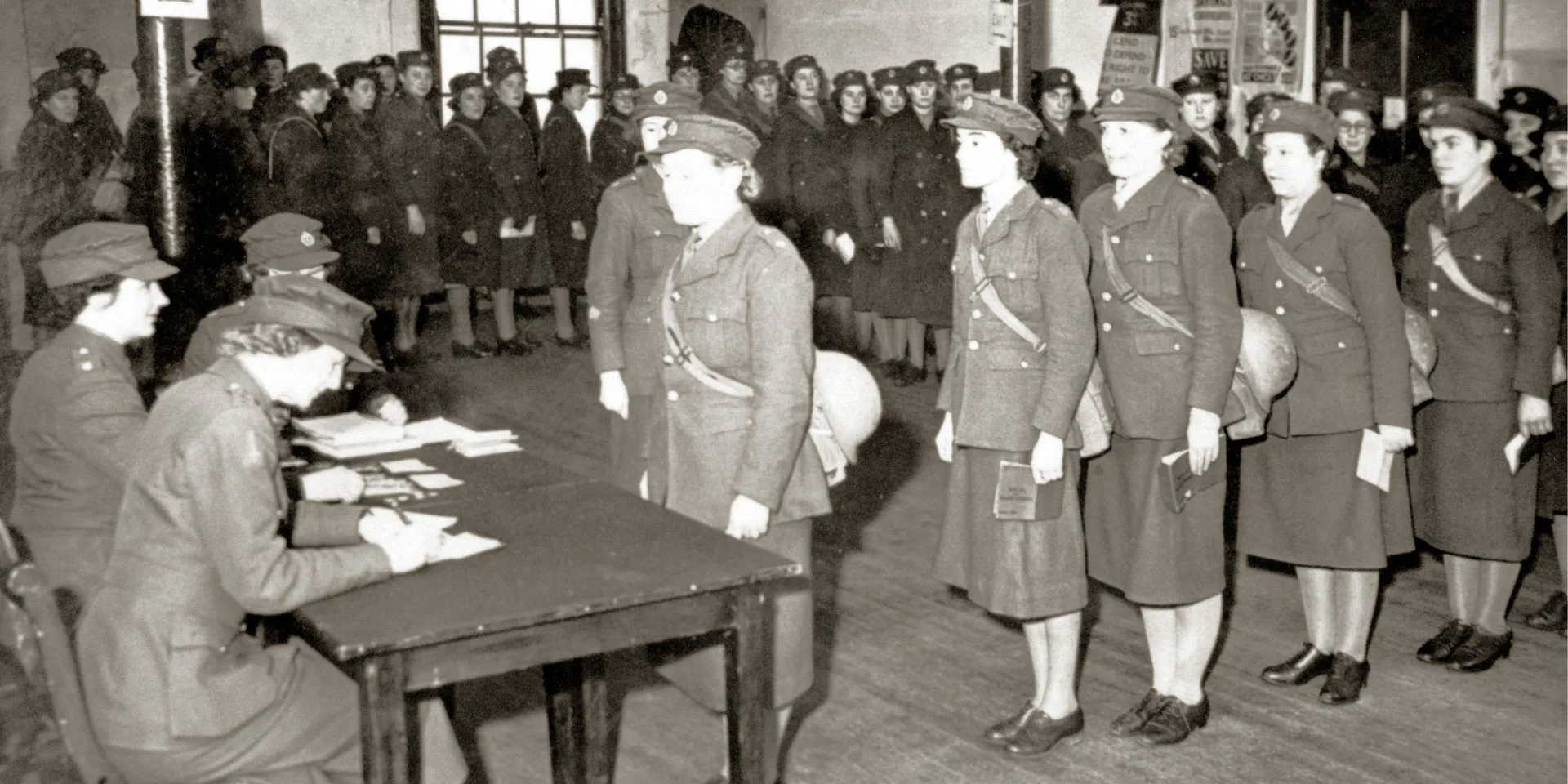
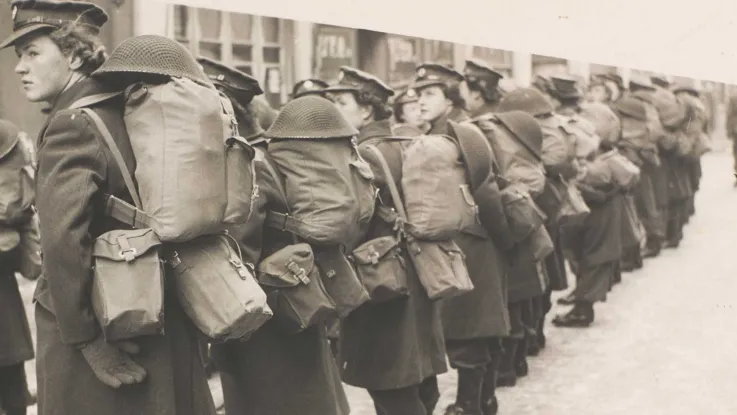
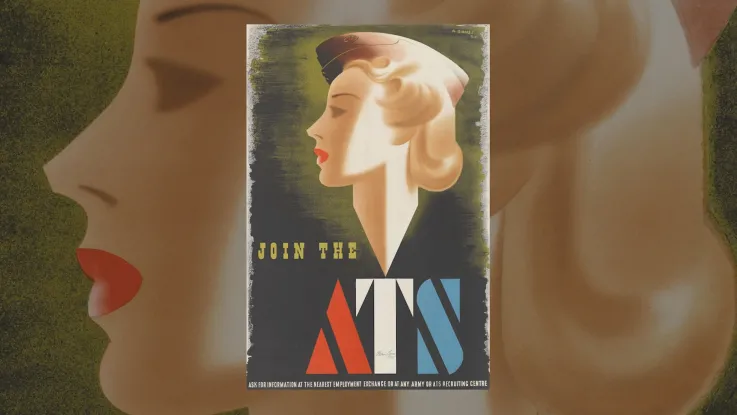
Although QMAAC had been disbanded in 1921, it inspired the formation of the Auxiliary Territorial Service (ATS), which was established in September 1938. Women were still not allowed to fight in battle, but once again returned to supporting roles during the Second World War (1939-45).
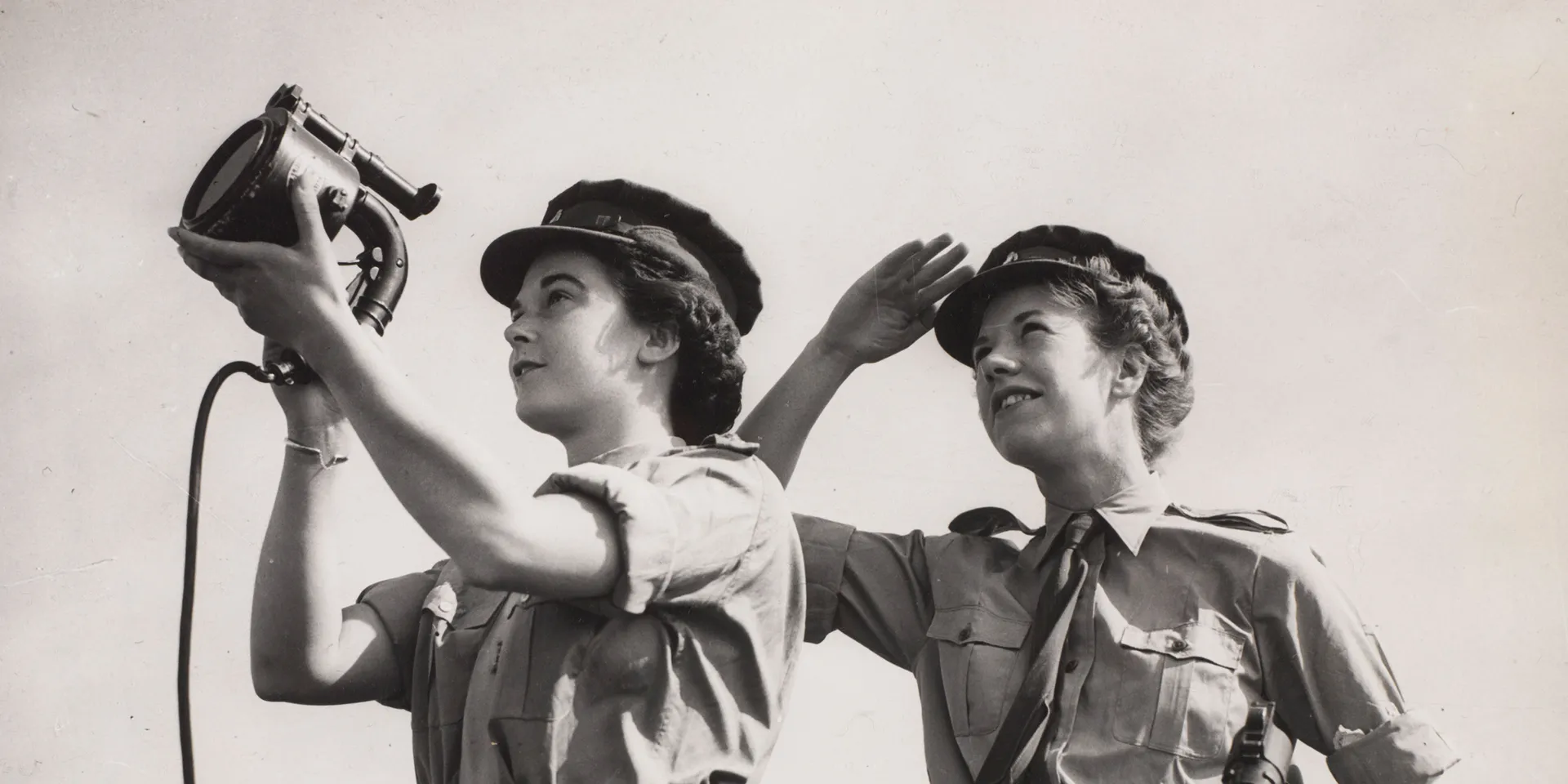
They served as cooks, clerks, drivers, radar operators, telephonists, anti-aircraft gunners, range finders, sound detectors, military police and ammunition inspectors. The Women's Royal Naval Service and the Women's Auxiliary Air Force were also established at that time.
Women again went to work on the Home Front too, either in industrial roles, as before, or as part of the Women's Land Army.
July 1941
Auxiliary Territorial Service
The Auxiliary Territorial Service (ATS) is given full military status, meaning its members are no longer volunteers.
December 1941
Conscription of women
The National Service Act makes the conscription of women legal. At first, only single women aged 20-30 are called up. But by mid-1943, almost 90 per cent of single women and 80 per cent of married women are employed in war work.
February 1945
Royal service
Princess Elizabeth (later Queen Elizabeth II) joins the ATS, training at Aldershot as a driver and mechanic.
8 May 1945
VE Day
By the end of the war, over 190,000 women are members of the ATS.
Women's Royal Army Corps
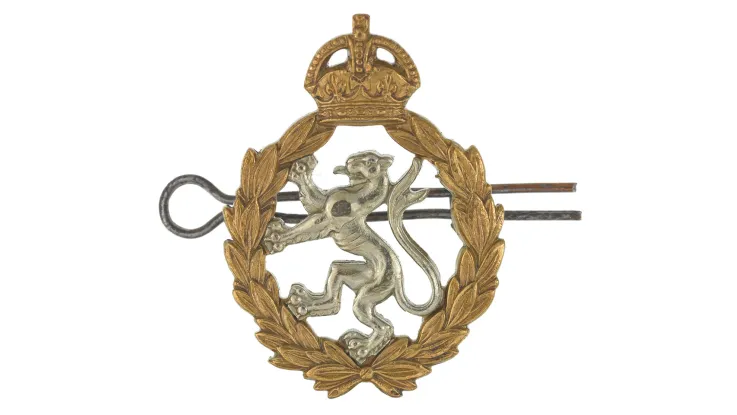
The Women's Royal Army Corps (WRAC) was formed in 1949, absorbing the remaining troops of the ATS. It eventually included all women serving in the Army except medical and veterinary orderlies, chaplains and nurses.
Between 1949 and 1992, WRAC members served in over 40 trades in operations across the world, including Malaya (1948-60), Kenya (1952-60), Cyprus (1955-59), Aden (1963-67), Northern Ireland (1969-2007) and the Gulf War (1990-91).
1 February 1949
Women's Royal Army Corps
The Women's Royal Army Corps (WRAC) is formed as a successor to the ATS.
March 1952
Harmonisation
Ranks in the WRAC are aligned with standard British Army ranks.
1975
Supporting roles only
The Sex Discrimination Act is introduced. Section 85(4) allows for the continuing exclusion of women from combat roles.
1982
Weapons
Women are first allowed to train in, carry and use firearms.
1984
Officer training
Women are first allowed to train as officers at the Royal Military Academy Sandhurst, replacing the previous system of separate training at the Women’s Royal Army Corps College, Camberley.
1991-92
Search dogs
Ellie Walton becomes the first female soldier to patrol with an arms and explosives search dog in Northern Ireland.
1992
Disbandment
The WRAC is disbanded, and its non-medical members merge into the new Adjutant General’s Corps.
1992
Royal Irish Regiment
Women join the Royal Irish Regiment and deploy in Northern Ireland after completing infantry training.
Women in combat roles
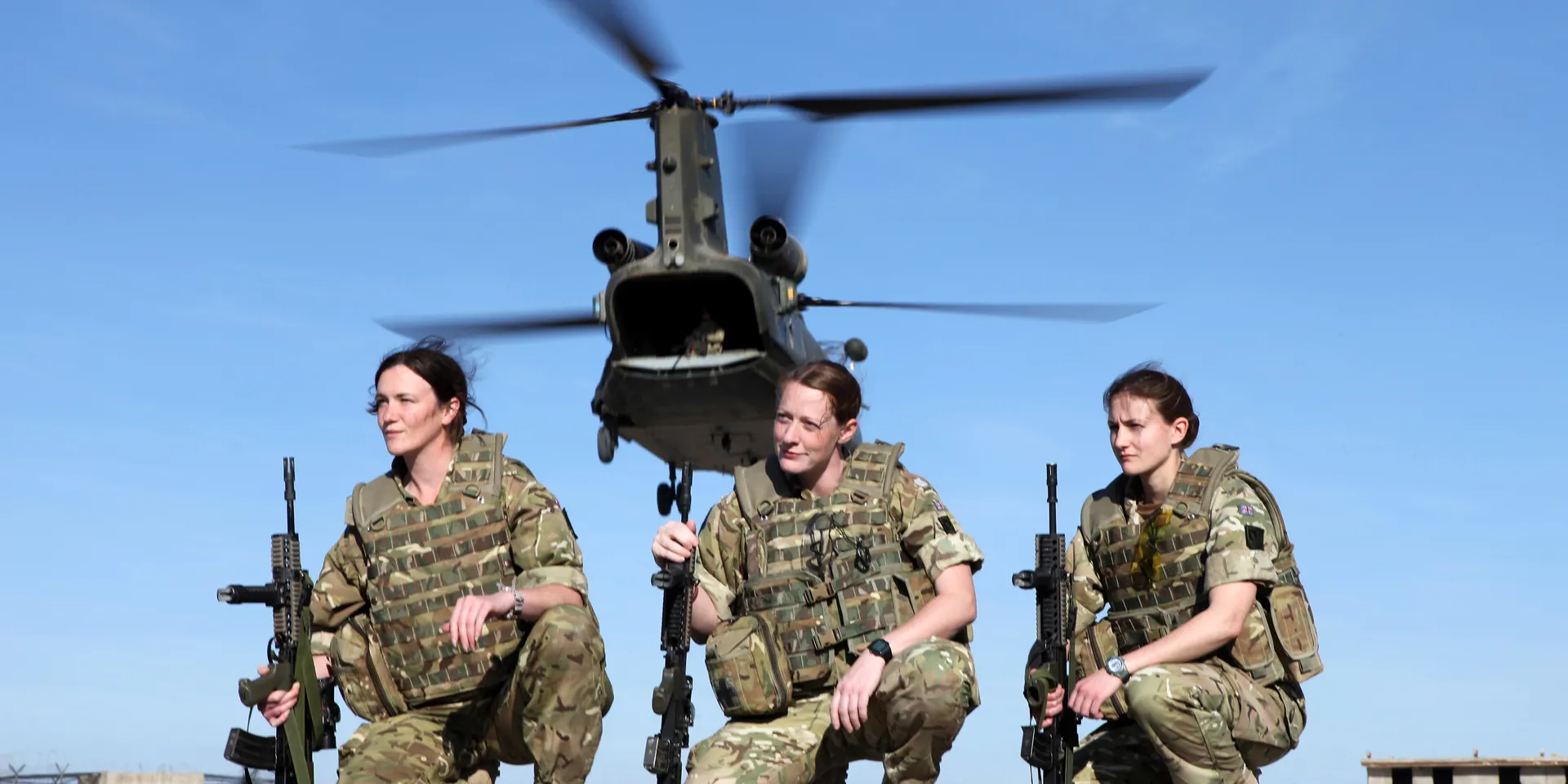
Following the disbandment of the WRAC in 1992, women were absorbed into the rest of the Army. But they were still largely restricted to support and medical positions.
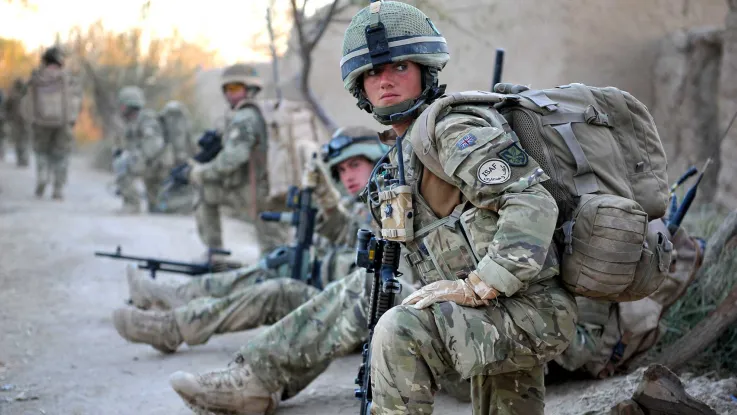
Combat roles remained closed to the vast majority of female soldiers until 2016, despite the fact that women had already been present at the front for some time. Six women were killed in action in Iraq (2003-11), and another three in Afghanistan (2001-14).
Much of the debate about female combat centred on the impact of gender integration on battle effectiveness. Many questioned whether female physical and psychological characteristics were suitable for combat, rather than looking at their overall contributions to teams and units.
1999
Challenges to the status quo
The exclusion of women from certain roles in the military under the Sex Discrimination Act is challenged unsuccessfully in the European Court of Justice. The same year, Patricia Purves becomes the first woman to gain the rank of brigadier since the disbandment of the WRAC.
2002
Not fit for service
A Ministry of Defence study concludes that women in ground combat roles could adversely affect ‘unit cohesion’.
2007
Military Cross
Private Michelle Norris of the Royal Army Medical Corps becomes the first woman to receive the Military Cross after saving her commander's life during a search operation in Iraq.
2008
At close quarters
While serving as a combat medic in Helmand Province, Afghanistan, Chantelle Taylor becomes the first female British soldier to kill an enemy combatant at close quarters.
2009
The Ministry changes its tune
A Ministry of Defence report concludes that there was no statistically significant evidence in relation to women and unit cohesion. Nevertheless, women remain excluded from close-combat roles.
December 2014
End of exclusion
The Women in Close Combat Review recommends ending the ban on women in front-line infantry and armoured corps roles. That same year, Sharon Nesmith becomes the first woman to command a British Army brigade.
December 2015
Open to all
Prime Minister David Cameron announces that all armed forces roles will be open to women.
2016
Lifting the ban
The ban on women serving in some parts of the Royal Armoured Corps is lifted in July 2016. Role-based training begins in November 2016 for women wanting to join the regular army.
October 2018
All roles
British Defence Secretary Gavin Williamson announces that all combat roles are open to women, including infantry and special forces units.
February 2020
Parachute Regiment
Captain Rosie Wild becomes the first woman to pass the gruelling Parachute Regiment entry test.
8 March 2026
All ranks
The Army announces that, for the first time in its history, women are serving at every rank, from private to general.
Explore further
Stepping into line
Breaking boundaries
Women’s work?
Women’s Royal Army Corps