Post-War Civil Defence: Women, Citizenship and Nuclear Survival
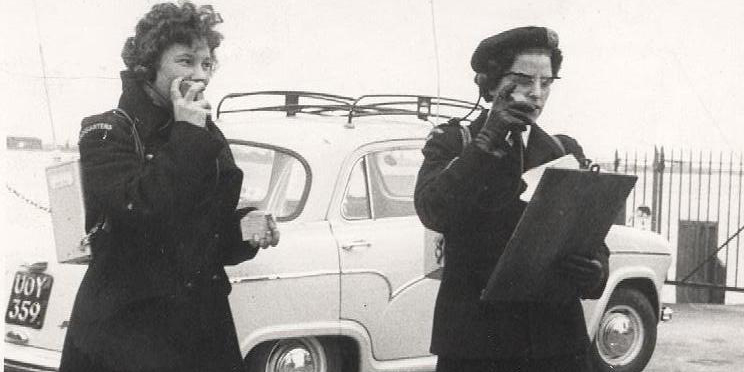
Jessica Douthwaite considers why young women volunteered for nuclear civil defence initiatives in the 1950s.
The key to understanding young volunteers' experiences of civil defence between 1948 and 1968 lies in identifying how they interpreted the purpose of their training in a post-war world. Their instincts were often more practical and peace-loving than we might assume. Although they supported Cold War security, they did not necessarily find it easy or normal to imagine nuclear war.
For young women, volunteering offered opportunities to expand their horizons and acquire ‘self-help’ skills more commonly associated with men. Yet home and family remained central to their priorities, reflecting the gender norms and social expectations of the time.
Drawing on extensive oral history research, civil defence archives and her book A Nuclear Peace: British Society and the Cold War, 1945–1962, Jessica will examine how women approached the task of surviving nuclear war.
Image: East Riding Archives
About the speaker
Jessica Douthwaite is a historian of post-war and Cold War Britain. Her background in the history of international relations emerged through an MSc at the London School of Economics (LSE). She subsequently developed her expertise in museology and oral history through her PhD (University of Strathclyde) and postdoctoral (University of Stirling) positions, both of which involved collaboration with museums (Imperial War Museums and National Museums Scotland respectively).
Jessica has published her research in academic and non-academic outlets and contributed to broadcast media. She is currently a curator at the Military Intelligence Museum.
Explore further