Before the Beaches: Britain and America on the Road to D-Day
D-Day is often remembered as a single military operation, but its success depended on years of preparation shaped by two distinct national experiences.
D-Day was the Allied invasion of Nazi-occupied France during the Second World War and marked the beginning of the liberation of Western Europe. Taking place on 6 June 1944, the operation formed part of Operation Overlord, the largest amphibious invasion in military history.
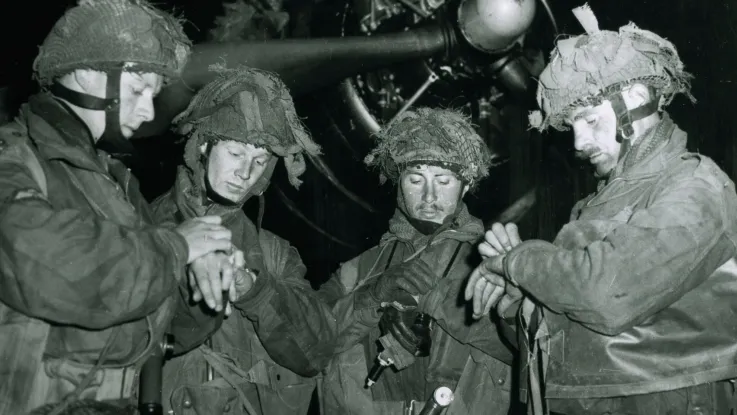
On D-Day, more than 150,000 Allied troops, primarily from the United States, Britain and Canada, landed across five beaches along the Normandy coast of northern France: Utah, Omaha, Gold, Juno and Sword. The invasion was supported by thousands of ships, aircraft and airborne troops parachuted behind enemy lines during the early hours of the operation.
The assault followed years of planning and preparation by the Allied powers. Together, the Allies coordinated a massive logistical effort involving deception campaigns, intelligence operations and the movement of troops and equipment across the English Channel.
Despite heavy casualties Allied forces successfully established a foothold in Normandy. The landings opened a western front against Nazi Germany and paved the way for the liberation of Paris in August 1944 and, ultimately, the defeat of Germany in May 1945.
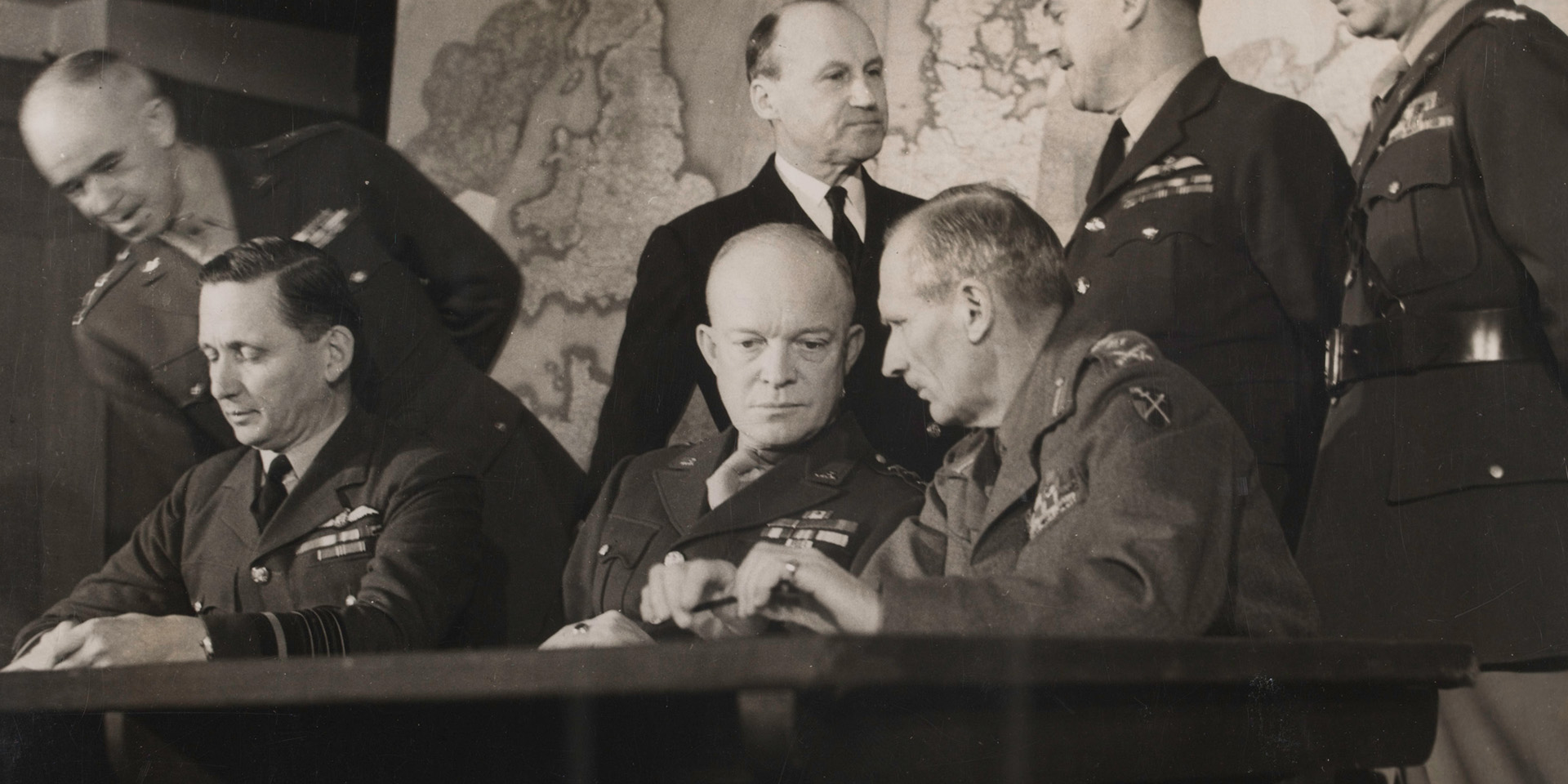
In this event, in collaboration with the US Embassy, our panel of experts will discuss how the parallel national experiences of both the US and Great Britain came together in the planning and execution of D-Day.
Schedule
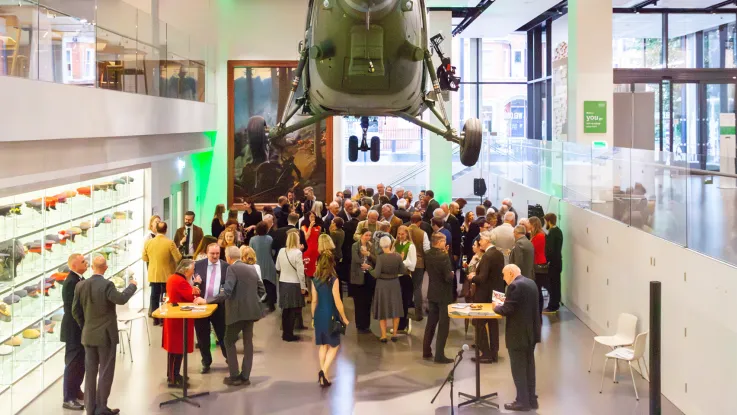
- 5.45pm – Drinks reception
- 6.30pm – Panel discussion
- 7.30pm – Event ends
About the panel
Dr Daniel Cowling is a Historian at the National Army Museum who specialises in modern British and European history. He completed his PhD at the University of Cambridge, where he wrote a thesis on the British occupation of Germany. His first book, ‘Don’t Let’s Be Beastly to the Germans’, was published by Head of Zeus in 2023.
Gary Mead studied at the University of Newcastle before becoming a journalist for the ‘New Statesman’, ‘Observer’, ‘Financial Times’ and the BBC World Service. He has also worked for the World Gold Council and in Washington, DC. His latest military history book is ‘Montgomery: Unbeatable, Unbearable’.