
Chasing Spies: Local Security and Home Defence in August 1914
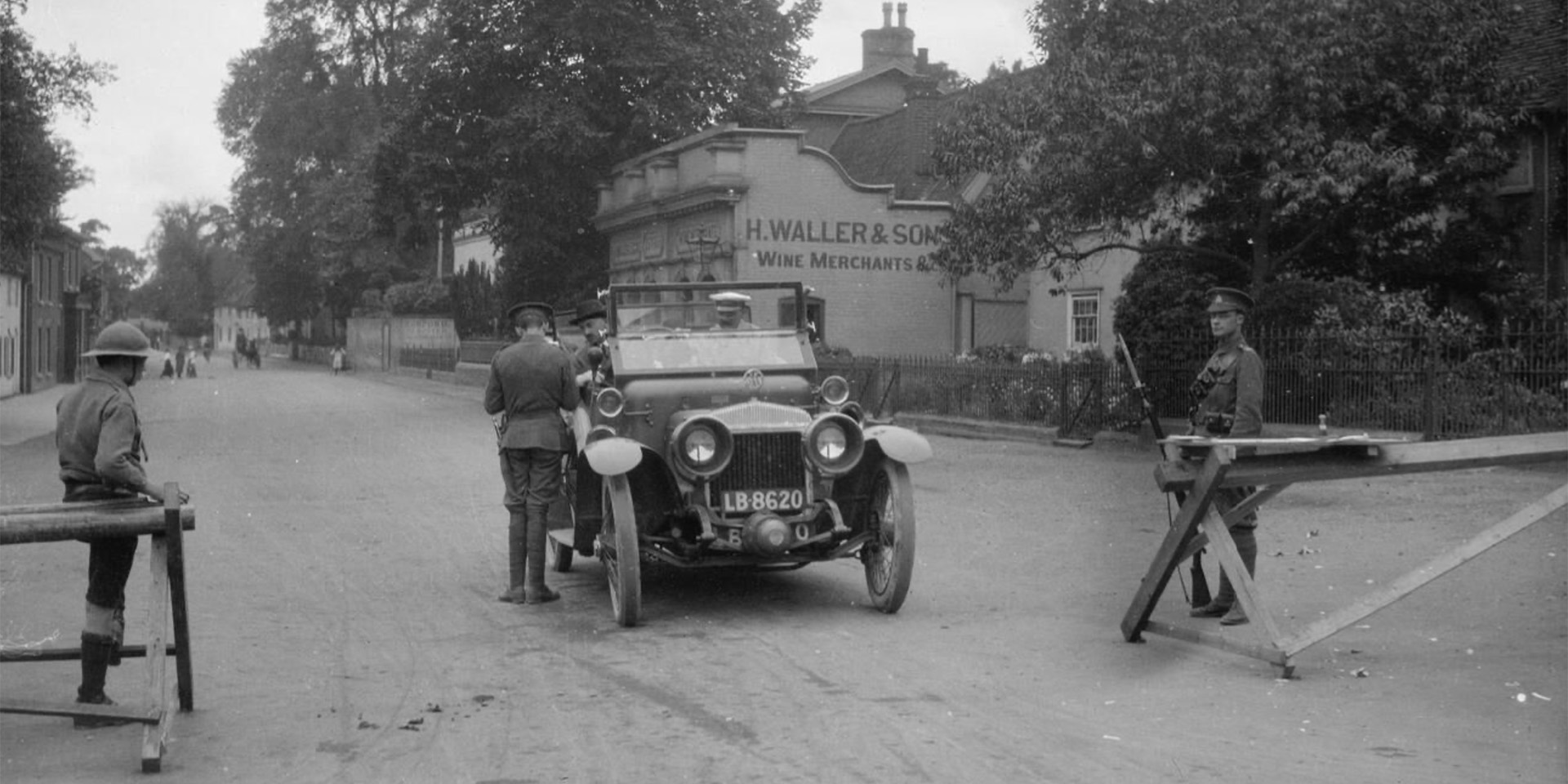
Historian Harry Richards reveals the impact of 'spy fever' on British society and home defence during the First World War.
Following the declaration of war in 1914, sightings of German spies across Britain fuelled a phenomenon known as 'spy fever.' Thousands of Territorial soldiers were suddenly deployed to guard railways, docks, bridges and other vulnerable points.
Lacking clear guidance, often poorly equipped and repeatedly warned to expect German spies and saboteurs, these part-time soldiers found themselves at the centre of Britain’s internal security effort. Their heightened sense of responsibility, combined with ambiguous government directives urging ‘special vigilance’, fostered an atmosphere in which suspicion flourished.
While this danger never fully materialised, the fear of spies remained a prominent aspect of politics and popular culture throughout the First World War.
Many early spy scares originated not among civilians but among anxious Territorials and local police officers, who believed they were confronting a hidden enemy. These encounters – ranging from wrongful arrests to tragic shootings – helped convince the wider public that German agents were active across the country.
By examining the human experience of mobilisation in 1914, this talk highlights how official warnings, local initiative and the lived realities of the Territorials combined to construct one of the most striking Home Front anxieties of the First World War.
Image courtesy of the Imperial War Museums
About the speaker
Harry Richards is the Deputy Director of the University of Portsmouth’s Military Education Team at RAF College Cranwell. He hosts the podcast 'Air Power and International Security' and is the author of 'Fearing the Enemy Within: British Spy Fever in the First World War'.