Spoils of war
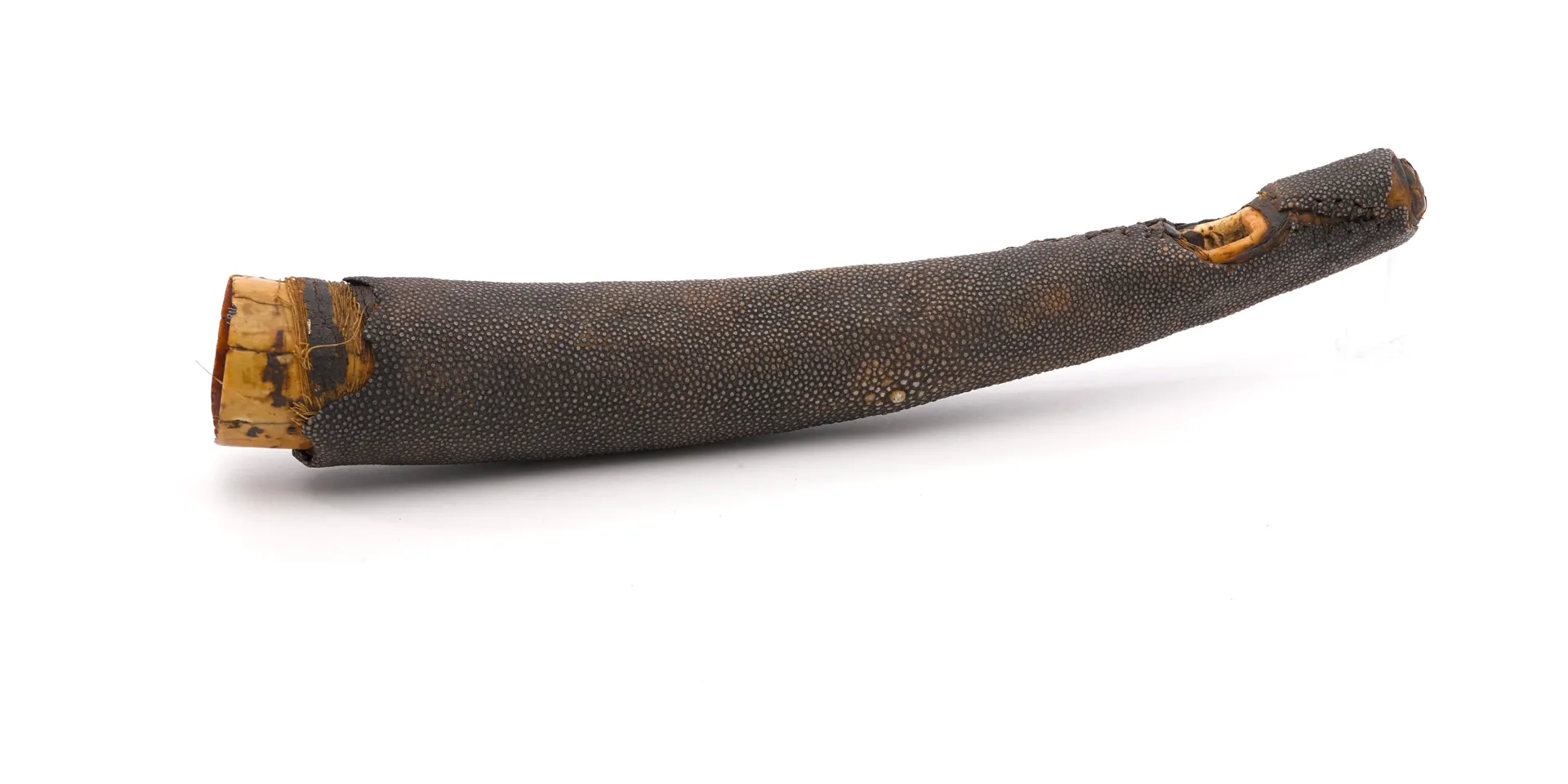
The war horn pictured above is made from an elephant tusk covered with stingray skin. It came into British possession in 1824 during the First Ashanti War (1823-31).
The Ashanti (or Asante) kingdom was located in the interior of what is now Ghana. Horns held great spiritual significance in Ashanti ceremonial life. They were also used in battle, both to intimidate the enemy and to communicate with allies.
Although a venerated artefact, this horn was one of several items taken by British soldiers during the conflict. However, the Ashanti took trophies of their own. Their most notable prize was the head of Sir Charles McCarthy, governor of the neighbouring British territories on the Gold Coast.

‘It appears evident that though they have been blustering and threatening our forts, without any just cause, since last August, they were not prepared for war, but depended solely upon the terror of their name to bring us to seek a compromise.’Sir Charles McCarthy on the Ashanti in a letter to Earl Bathurst — 7 April 1823
Ashanti incursions
In 1821, the British government took over territories along the Gold Coast from the African Company of Merchants, which had been in decline since the abolition of the Atlantic slave trade in 1807.
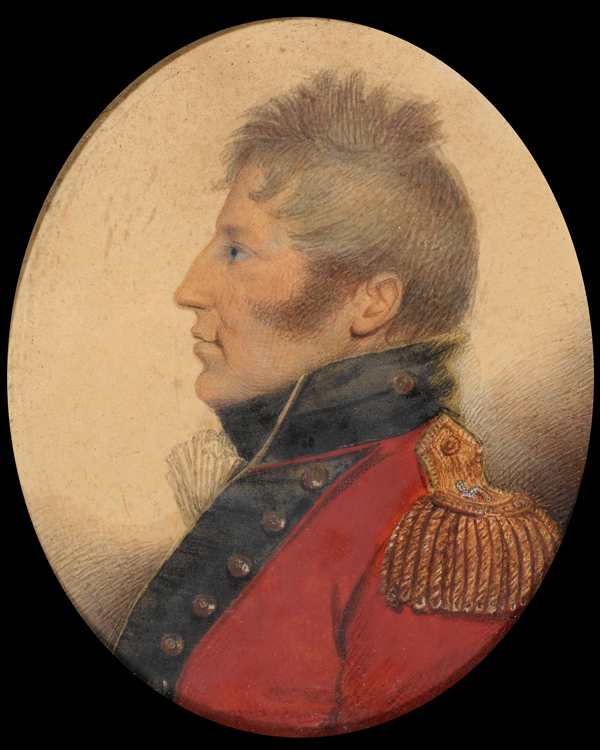
Brigadier General Sir Charles McCarthy, a soldier of Irish descent, was appointed governor. He sought to resist incursions from the interior by the Ashanti against the Fanti, who inhabited the coastal region and were generally more amenable to the British.
The Ashanti were motivated by a desire for a greater share of the Gold Coast’s growing commerce. They also objected to Britain’s enforcement of measures against slavery.
McCarthy mustered an army of Fanti tribesmen, local militia and regulars from the Royal African Colonial Corps, and devised a strategy that would see four columns converge on the Ashanti and defeat them.
Costly mistakes
Unfortunately for McCarthy, his ambition exceeded his knowledge of the terrain.
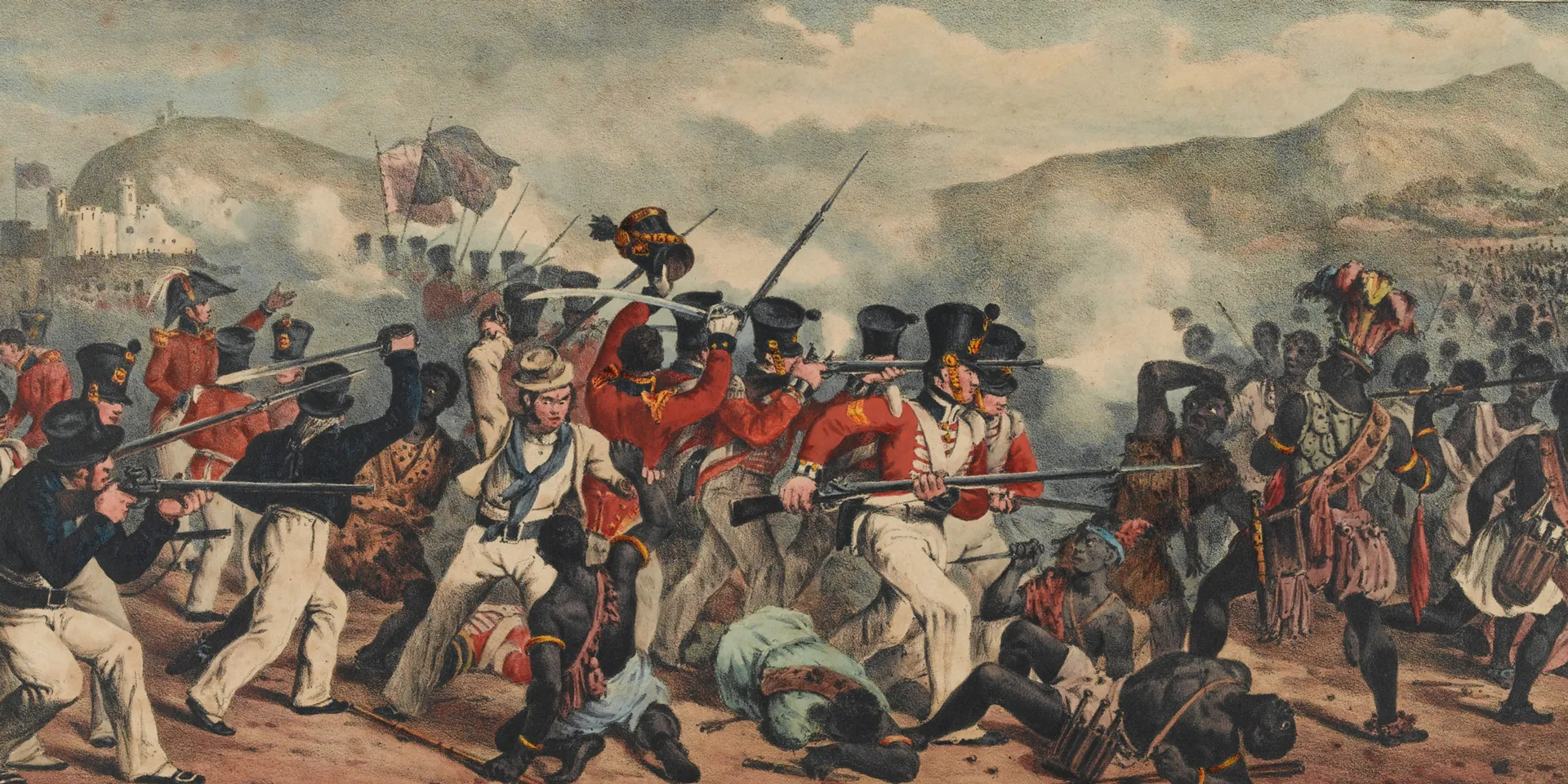
On 21 January 1824, his column of 500 men encountered a 10,000-strong Ashanti force at Nsamankow. After a sporadic firefight, McCarthy’s troops were soon in need of resupply.
At that point, the situation collapsed. His men deserted him after the ordnance storekeeper mistakenly sent kegs of pasta up to the front line instead of ammunition.
McCarthy's fate
Wounded during the battle, McCarthy chose to take his own life rather than fall into enemy hands. The Ashanti removed his head and carried it back in triumph to their capital, Kumasi. There, it was fashioned into a gold-rimmed drinking cup for their king.
McCarthy's skull was recovered in 1829 and interred at St Saviour's Church in Dartmouth, Devon.
The British military expedition to Kumasi in 1874, also known as the Third Ashanti War, later recovered some silver dinner forks that had been looted from McCarthy's baggage in 1824. One of these forks is currently on display in our Global Role gallery.
Explore further
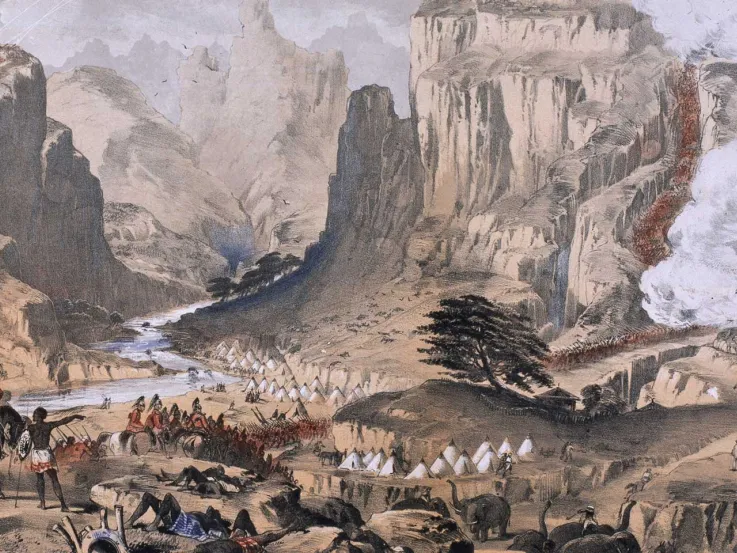
Abyssinia Expedition
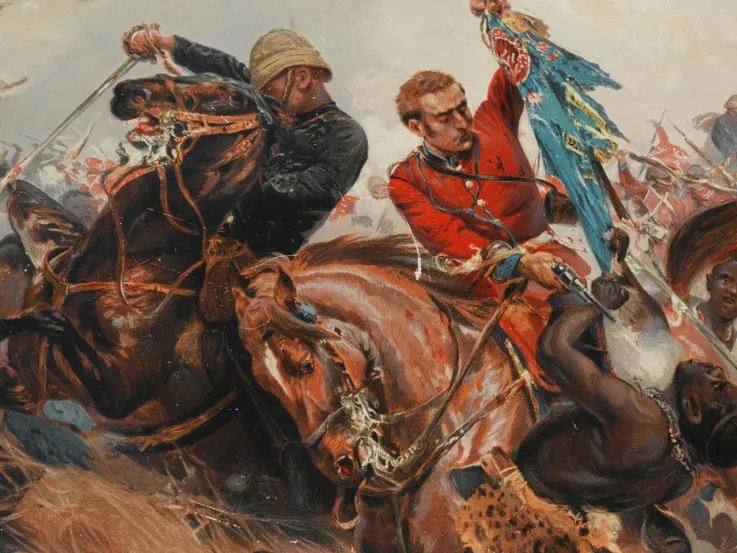
Zulu War
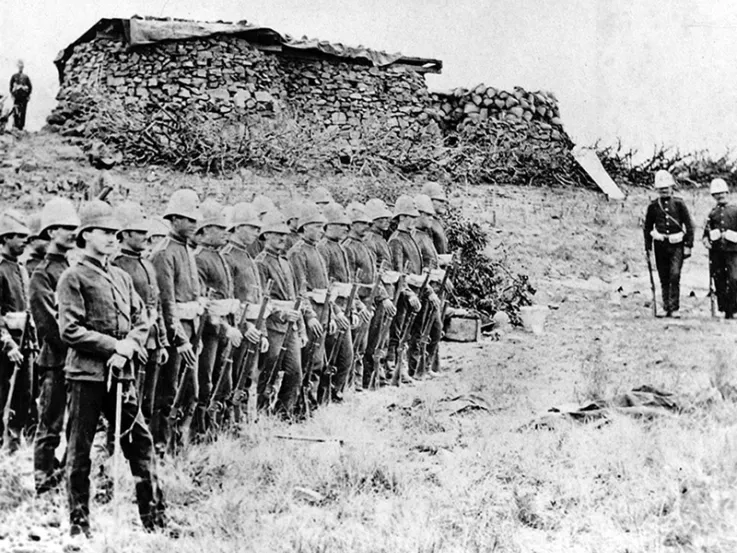
Transvaal War
Global Role gallery
Egypt and Sudan